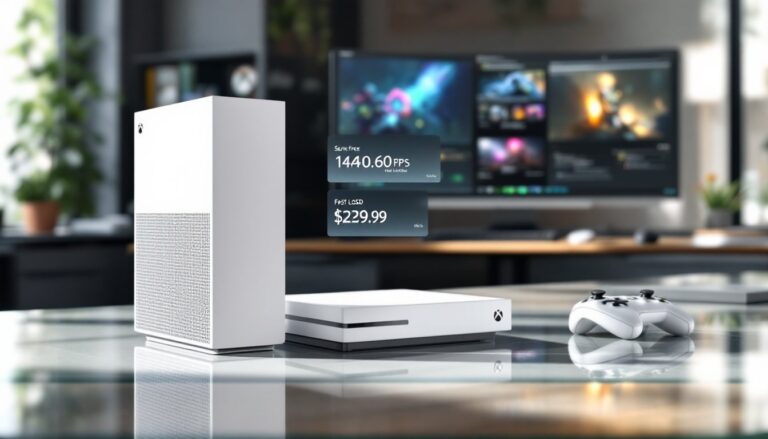
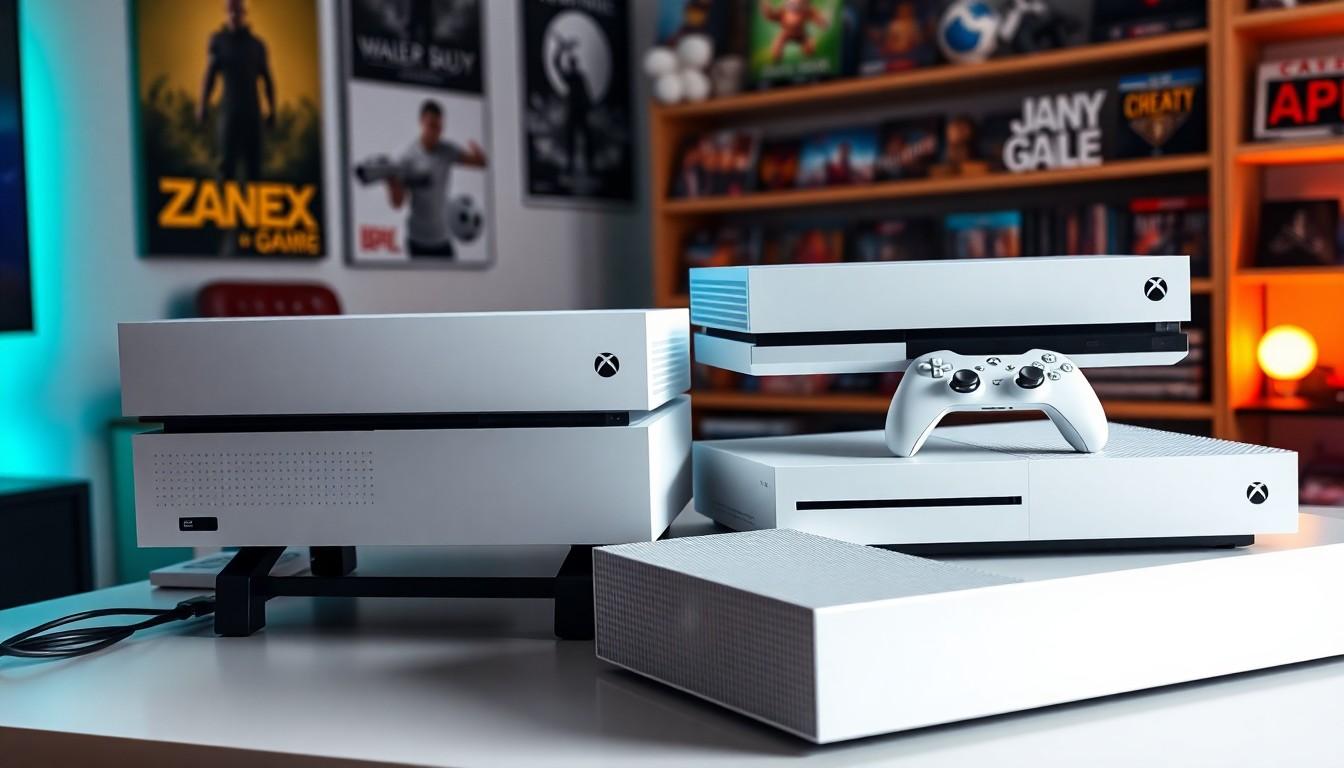
In the ever-evolving world of gaming, choosing the right console can feel like picking a favorite child—tough and fraught with emotion. Enter the Xbox Series S and the Microsoft Xbox One S, two contenders battling for your attention and hard-earned cash. With specs that could make even the most seasoned gamer raise an eyebrow, it’s time to dive into the nitty-gritty and see which console deserves a spot on your entertainment shelf.
The Xbox Series S promises next-gen gaming in a sleek, compact design, while the Xbox One S still holds its ground as a reliable option for those who crave a solid gaming experience without breaking the bank. So, which one should you invest in? Buckle up as we compare these two gaming titans and help you decide which console will keep your thumbs twitching and your friends envious.
Overview of Xbox Series S and Microsoft Xbox One S
The Xbox Series S features superior specs compared to the Microsoft Xbox One S. It offers a custom AMD processor with 4 teraflops of graphical performance, while the Xbox One S operates at 1.4 teraflops. The Series S incorporates a fast SSD, enhancing load times significantly, while the One S relies on traditional HDD technology.
Gamers appreciate the Series S’s targeted 1440p resolution and support for up to 120 frames per second. In contrast, the One S typically outputs at 1080p with a frame rate capped around 60 frames per second. The Series S supports ray tracing and variable refresh rates, delivering a more immersive gaming experience. Conversely, the One S lacks support for these advanced technologies.
In terms of storage, the Series S includes a 512GB SSD, which is much faster than the One S’s 500GB HDD. Although the One S’s storage can be expanded with external drives, the Series S utilizes a specialized slot for additional SSD storage, designed for maximum speed. Both systems support backward compatibility, but the Series S brings enhanced performance for older titles.
The Series S boasts a compact and modern design, fitting seamlessly into any gaming setup. The One S, while slightly bulkier, remains a popular choice for its reliability. Each console targets different audiences; the Series S appeals to gamers seeking the latest technology, while the One S remains cost-effective for casual players.
Design and Build Quality
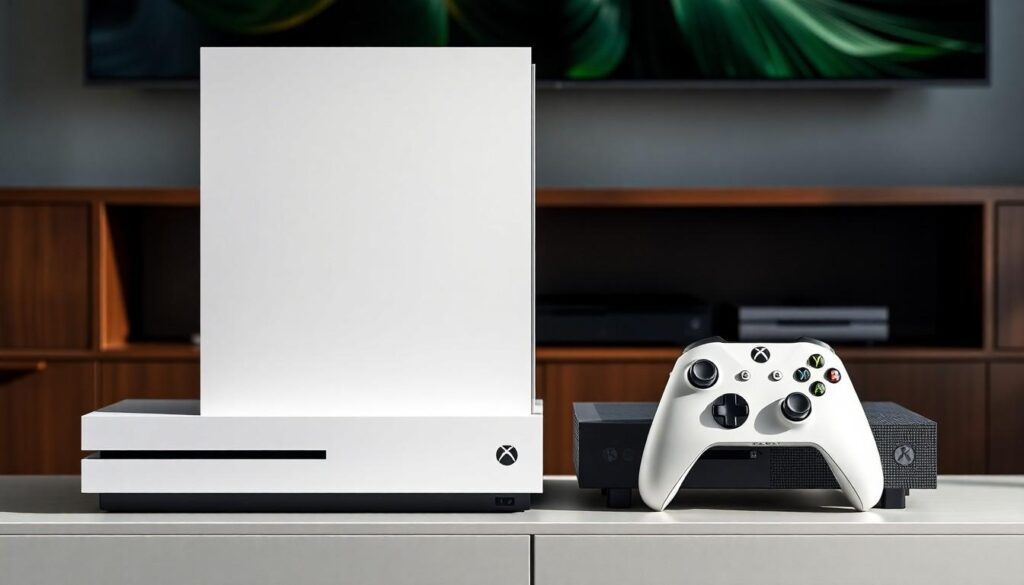
Both the Xbox Series S and Microsoft Xbox One S showcase distinct design philosophies, catering to different gamer preferences.
Xbox Series S Design Features
A clean, minimalist design defines the Xbox Series S. It features a sleek white exterior with a large circular vent on the side for effective airflow. The compact dimensions, measuring 11.4 x 5.9 x 11.0 inches, make it easy to fit into any entertainment setup. Textured surfaces add to the modern aesthetic, while a green LED logo provides a subtle touch of color. Connectivity options are plentiful, including three USB ports and an HDMI 2.1 output. Gamers appreciate the console’s lightweight design at 4.25 pounds, simplifying transport.
Microsoft Xbox One S Design Features
In contrast, the Microsoft Xbox One S adopts a more traditional console design. The console is larger, with dimensions of 11.6 x 3.1 x 9.0 inches, offering a robust build. A matte white finish combined with a glossy top creates an appealing look. It incorporates a side vent and a front-facing USB port for ease of access. The power button integrates seamlessly into the design with a soft-touch feature. Weighing 6.0 pounds, it provides durability while still being manageable to move within a gaming setup. Overall, the Xbox One S blends style and practicality for budget-conscious gamers.
Performance and Specifications Comparison
This section delves into the key specifications of the Xbox Series S and the Microsoft Xbox One S, offering a clear comparison of their performance capabilities.
Processor and Graphics
The Xbox Series S incorporates a custom AMD processor, delivering 4 teraflops of graphical power. This advanced architecture enables support for features like ray tracing and variable refresh rates. In contrast, the Xbox One S operates at 1.4 teraflops, limiting its graphical capabilities. While the Series S targets a resolution of 1440p at up to 120 frames per second, the One S typically outputs at 1080p with a frame rate capped around 60 frames per second. Gamers looking for a cutting-edge experience will find the Series S significantly more capable due to its modern design and features.
RAM and Storage
The Xbox Series S boasts 10GB of GDDR6 RAM and utilizes a fast SSD with a capacity of 512GB, allowing for quicker load times and seamless gameplay. In comparison, the Xbox One S features 8GB of DDR3 RAM and a traditional 500GB HDD, which can be expanded with external drives. However, the slower HDD impacts loading efficiency and overall performance. Players who prioritize speed and storage efficiency should consider the upgraded specs of the Series S over the One S’s more limited architecture.
Gaming Experience
The gaming experience on both consoles varies significantly due to their specifications and capabilities.
Load Times and Performance
Load times greatly improve with the Xbox Series S. Equipped with a fast 512GB SSD, it significantly enhances gameplay speed, often loading games in seconds. In comparison, the Xbox One S relies on a 500GB HDD, which results in longer loading times. Performance metrics clearly favor the Series S, as its custom AMD processor delivers 4 teraflops of graphical power. While the One S operates at 1.4 teraflops, it struggles to provide the same level of performance, especially in demanding games. Gamers seeking faster and smoother gameplay will prefer the Series S due to its emphasis on rapid load times and enhanced visual quality.
Game Library and Backward Compatibility
Game libraries also differ between the two consoles. The Xbox Series S supports a broad range of titles, including those from previous generations, ensuring a diverse gaming experience. Its backward compatibility encompasses many Xbox One and select Xbox 360 games, providing access to a vast catalog. On the other hand, the Xbox One S primarily features an extensive library of Xbox One games, with limited backward compatibility to selected Xbox 360 titles. Consequently, gamers looking for a modern library combined with nostalgic classics will favor the Series S, while those satisfied with current-gen titles might find the One S adequate for their needs.
Connectivity Options
Both consoles offer various connectivity options, enhancing user experience. The Xbox Series S features three USB 3.1 ports, an ethernet port, and an HDMI 2.1 output. Its HDMI 2.1 output ensures support for higher frame rates and resolutions, ideal for modern displays. In contrast, the Xbox One S includes three USB 3.0 ports, an ethernet port, and an HDMI 2.0 output. Although the One S lacks the advanced HDMI capabilities of the Series S, it still provides sufficient connectivity for most setups.
Online Services and Features
The Xbox Series S includes access to Xbox Live Gold and Xbox Game Pass, offering gamers a broad library of titles and multiplayer capabilities. Microsoft enhances online gaming with faster load times due to the console’s SSD. In comparison, the Xbox One S also supports Xbox Live Gold and Game Pass, but its downloading speed generally falls behind the Series S. The difference in online service responsiveness becomes noticeable during peak usage times.
Additional Accessories
Additional accessories complement both consoles. The Xbox Series S is compatible with the Xbox Wireless Controller, providing innovative features like share buttons and improved haptic feedback. Accessibility and customization options thrive in the Series S ecosystem, integrating seamlessly with various peripherals. The Xbox One S also supports the wireless controller alongside numerous Xbox accessories, including the Kinect and external storage options. Users can expand storage with USB drives for both consoles, increasing gaming space as needed.
Conclusion
Choosing between the Xbox Series S and the Microsoft Xbox One S ultimately comes down to individual gaming preferences and budget. The Xbox Series S stands out with its advanced technology and superior performance, catering to gamers who want the latest features and faster gameplay. Its sleek design and enhanced capabilities make it a compelling option for those ready to invest in next-gen gaming.
On the other hand, the Xbox One S remains a solid choice for casual gamers or those looking for a more affordable option. While it may not offer the same level of performance or modern features, its reliability and extensive game library still appeal to many. Each console has its strengths, ensuring that gamers can find a suitable match for their needs.