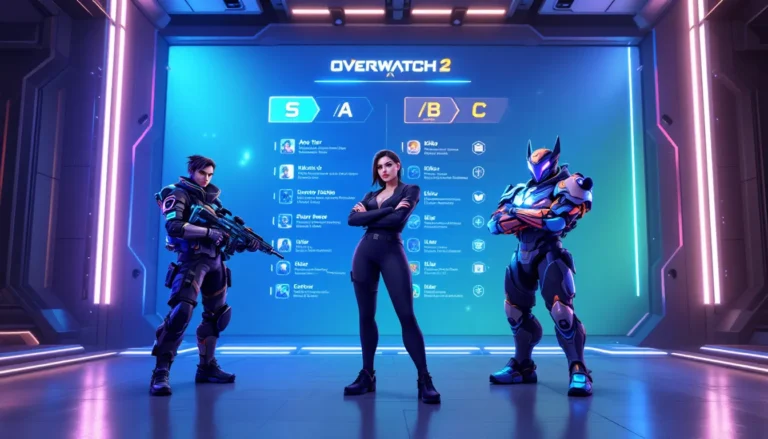

Blizzard’s Overwatch has maintained its position as a cultural and competitive titan for nearly a decade, and it’s not just because of tight gunplay or objective-based chaos. The real secret? Characters you actually care about. From Tracer’s cheeky grin to Reinhardt’s booming honor, every hero feels like someone you’d want on your squad, or at least someone you’d remember after a brutal ranked loss.
But creating a roster of 40+ heroes that players can instantly recognize, relate to, and master isn’t luck. It’s a meticulous blend of art, narrative, gameplay mechanics, and community feedback that Blizzard has refined over years of patches, reworks, and seasonal updates. As Overwatch 2 continues to evolve in 2026, understanding how these characters come to life reveals why some heroes become instant classics while others fade into obscurity. Let’s break down the blueprint.
Table of Contents
ToggleKey Takeaways
- Overwatch characters are built through meticulous design combining art, gameplay mechanics, visual silhouettes, voice acting, and lore integration to create instantly recognizable and memorable heroes.
- Blizzard’s live-service model uses continuous player feedback and competitive data to update and rework Overwatch heroes every 3-4 weeks, ensuring the roster remains balanced and fresh without alienating veterans.
- Visual design clarity is critical to Overwatch’s success—each hero’s silhouette, color palette, and proportions are optimized for instant threat identification and role recognition during fast-paced combat.
- Personality-driven voice acting and contextual dialogue transform Overwatch characters from mechanical avatars into relatable personas that inspire community creativity across fan art, cosplay, and content creation.
- Upcoming Overwatch expansions, including a Netflix animated series, mobile game, and paid PvE campaign, signal Blizzard’s commitment to establishing characters as transmedia properties comparable to Marvel or Star Wars franchises.
- Hero abilities are designed to inseparably reflect character identity and personality—ensuring mechanics like Reinhardt’s shield or Mercy’s healing reinforce their narrative roles rather than feel mechanically disconnected.
The Evolution of Overwatch Character Development
From Concept to Launch: Blizzard’s Design Philosophy
Blizzard’s character creation process starts years before a hero hits the live servers. The team begins with a core fantasy, what does this hero feel like to play? For Genji, it was the cybernetic ninja fantasy: mobility, precision, and flashy plays. For Moira, it was a morally ambiguous scientist who drains life and grants healing in equal measure.
Early concept art explores dozens of visual directions. Blizzard’s art team prioritizes silhouette recognition above all else. If you can’t identify a hero from their outline alone at 50 meters, the design fails. This philosophy is why Roadhog’s massive frame, Widowmaker’s slender sniper posture, and Torbjörn’s stocky engineer build are instantly distinguishable even in chaotic teamfights.
Once the visual direction is locked, the gameplay team prototypes abilities. This phase is brutal, most kits get scrapped entirely. Blizzard tests whether the abilities align with the hero’s fantasy and whether they create interesting counterplay. A hero that’s fun to play but miserable to face (looking at you, release Brigitte) gets reworked until both sides of the matchup feel fair.
The final step before launch is lore integration. Overwatch’s narrative team weaves each hero into the existing universe through animated shorts, comic books, and in-game voice lines. This isn’t just flavor, it’s how Blizzard ensures players remember heroes as characters, not just hitboxes with cooldowns.
How Player Feedback Shapes Hero Updates
Overwatch heroes aren’t static. Blizzard’s live-service model means constant iteration based on player data and community sentiment. Take Symmetra, who’s been completely reworked twice since launch. Her original kit, a support hero with a lock-on beam and teleporter ultimate, felt oppressive at lower ranks but useless at high ELO. Blizzard responded by shifting her to damage, redesigning her primary fire, and making her teleporter a tactical ability.
Patch cycles in 2026 are faster than ever. Mid-season balance updates drop every 3-4 weeks, with hero adjustments based on pick rates, win rates, and qualitative feedback from pro players and content creators. When Lifeweaver launched in Season 4 with underwhelming numbers, Blizzard buffed his healing output and platform cooldown within two weeks, a response time that would’ve been unthinkable in Overwatch 1’s early years.
Community forums, Reddit threads, and platforms that aggregate competitive gaming meta data all feed into Blizzard’s decision-making. But they don’t blindly follow the loudest voices. When players demanded Mercy nerfs after her controversial rework, Blizzard waited until they had hard data proving she was overperforming across all skill brackets before making changes. This balance between listening and leading is what keeps the roster feeling fresh without alienating veterans.
What Makes Overwatch Heroes Stand Out
Visual Design and Silhouette Recognition
Blizzard’s commitment to visual clarity is almost obsessive. Every hero’s silhouette is designed to be readable in a split second, because in a game where TTK (time-to-kill) can be under a second for squishies, identifying threats instantly is survival.
Key visual design principles:
- Shape language: Tanks are bulky and geometric (Reinhardt’s rectangular shield, Orisa’s quadrupedal stance). DPS heroes are angular and aggressive (Reaper’s jagged coat, Soldier: 76’s tactical gear). Supports are softer and rounded (Mercy’s flowing coat, Lúcio’s circular amp).
- Color coding: Each hero has a signature color palette that carries across skins. Even Legendary skins maintain core color cues so you’re never confused about who you’re fighting.
- Proportions: Blizzard exaggerates proportions to reinforce role identity. Tanks are 20-30% larger than realistic human scale. This isn’t just aesthetic, it makes them easier to hit and shields easier to hide behind.
The attention to detail extends to animations. Tracer’s blink has a distinct blue streak. Genji’s dash leaves a green trail. These aren’t just pretty effects, they communicate information to both teams during fights.
Personality and Voice Acting
Overwatch heroes talk. A lot. And it’s not filler, voice lines build personality, communicate tactics, and create emergent storytelling moments that players share on social media.
Matthew Mercer’s McCree (now Cassidy post-rebrand) delivers cowboy one-liners with a gravelly charm. Carolina Ravassa’s Sombra peppers conversations with Spanish slang and hacker bravado. These performances aren’t just voice work, they’re acting. Blizzard records hundreds of contextual lines for each hero: friendly banter, enemy taunts, objective callouts, and even reactions to specific hero matchups.
The result? Heroes feel like people. When Reinhardt bellows “HAMMER DOWN.” you feel the weight of a 61-year-old warrior putting everything into one decisive moment. When Junkrat giggles maniacally after a triple kill, you understand his chaotic energy. This characterization turns mechanical gameplay into memorable moments.
Some of the best character work happens in hero interactions that the community celebrates, where voice lines reveal relationships and history without requiring players to consume external lore. Genji and Hanzo’s tense exchanges. Mercy and Genji’s hints at their past. Ana’s maternal concern for Pharah. These details reward long-time players while staying invisible to newcomers who just want to shoot things.
Backstory and Lore Integration
Overwatch’s lore isn’t just marketing material, it’s the foundation that makes heroes resonate beyond their kits. Every hero has a backstory that explains their motivations, abilities, and place in the world.
Tracer isn’t just a fast DPS, she’s Lena Oxton, a former RAF pilot who got stuck phasing through time until Winston built her chronal accelerator. That backstory explains her blink and recall abilities while making her optimism (even though a traumatic accident) feel earned rather than generic.
Widowmaker’s transformation from Amélie Lacroix, loving wife, to emotionless assassin through Talon’s neural reconditioning adds tragedy to every cold-blooded headshot. Zenyatta’s philosophical approach to healing stems from his training in the Shambali monastery and his belief that even omnics deserve spiritual enlightenment.
Blizzard delivers this lore through multiple channels:
- Animated shorts: Cinematic quality storytelling (“The Last Bastion,” “Dragons,” “Honor and Glory”) that explore hero origins
- Comics and short stories: Free digital content that fills gaps between game events
- In-game Archives events: PvE missions that let players experience key moments from Overwatch’s history
- Hero challenges and battle pass lore: Seasonal storytelling tied to new content drops
This transmedia approach means players can engage with lore as much or as little as they want, but it’s always there, adding weight to every “Play of the Game.”
The Role of Community Creativity in Overwatch Culture
Fan Art and Content Creation
Overwatch’s character designs are so strong that they’ve spawned a creative community that rivals any in gaming. Within hours of a new hero reveal, artists flood social media with fan art, cosplay designs, and reimagined skins. This isn’t accidental, Blizzard designs heroes with enough visual interest and personality to inspire creativity while leaving room for interpretation.
The fan art community ranges from professional artists creating gallery-quality work to casual players sketching their mains during queue times. Platforms like Twitter, Instagram, and DeviantArt host millions of Overwatch pieces. Some artists have built entire careers around Overwatch content, landing official commissions or work in the games industry based on their fan portfolio.
Cosplay is another massive pillar. Overwatch’s diverse body types, armor designs, and color palettes make it accessible for cosplayers of all skill levels. A beginner can pull off a recognizable Tracer with an orange jacket and goggles. A veteran armor-smith can spend 500 hours building a screen-accurate Reinhardt suit. Blizzard actively celebrates this community through cosplay contests at BlizzCon and social media features.
Content creators have built empires around Overwatch characters. Streamers like Flats (Reinhardt specialist), ML7 (Ana virtuoso), and Awkward (Mercy main) don’t just play heroes, they embody them, creating guides, montages, and educational content that deepens community engagement with character kits and personalities. Using tools like a random hero selector can add variety to streams and keep content fresh across multiple heroes.
Community Events and Engagement
Blizzard leverages its character roster for year-round community engagement. Seasonal events transform heroes with themed skins, voice lines, and game modes that celebrate different aspects of the Overwatch universe.
Major annual events include:
- Summer Games: Athletic skins and Lúcioball, emphasizing the game’s optimistic, global sportsmanship themes
- Halloween Terror: Horror-themed skins (Witch Mercy, Dr. Junkenstein) and PvE brawls
- Winter Wonderland: Festive skins and casual game modes like Snowball Fight
- Lunar New Year: Cultural celebration skins honoring Asian heroes and traditions
- Archives: Lore-focused events with PvE missions exploring Overwatch history
These events do more than sell loot boxes, they give the community shared experiences tied to specific heroes. Players remember clutching a Dr. Junkenstein’s Revenge run as Soldier: 76 or landing the perfect Lúcioball save. These moments become part of their personal Overwatch story, strengthening attachment to the characters involved.
Blizzard also runs community contests, Play of the Game competitions, fan art showcases, and workshop mode creations. The Workshop, introduced in late Overwatch 1, lets players create custom game modes using hero abilities in new ways. Some community creations (likeOrde’s PvE scenarios) have millions of plays, effectively extending the game’s content through player creativity.
Balancing Gameplay Mechanics With Character Identity
Ability Design That Reflects Character Traits
The best Overwatch heroes have kits that feel inseparable from their personality. You can’t imagine Reinhardt without his shield or Mei without her ice abilities, the mechanics are the character.
Reinhardt is a protector, a loyal soldier who puts his body between danger and his team. His barrier field, charge, and hammer reinforce this identity. He has no ranged attacks because his fantasy is about standing his ground and enabling others.
Lucio is all about movement and positivity. His speed boost, wall-riding, and area-of-effect healing reflect his role as a DJ and freedom fighter who lifts up everyone around him. His kit literally makes the team move and feel better.
Widowmaker is patient, cold, and precise, the perfect sniper fantasy. Her grappling hook for positioning, venom mine for area denial, and wallhack ultimate all support a playstyle of calculated elimination from distance.
Blizzard’s design philosophy is “gameplay first, justify with lore”, but the justification has to feel natural. When they reworked Symmetra from support to damage, they updated her voice lines and narrative framing to emphasize her architect role as someone who shapes the battlefield rather than healing allies. The mechanical change required narrative support to maintain character consistency.
Sometimes this creates design constraints. Mercy will never have a damage-focused kit because her identity as a pacifist healer is core to her character. Torbjörn’s turret will always be central to his kit because he’s an engineer. These constraints actually help design by providing clear guardrails for what abilities fit the character.
Meta Shifts and Hero Viability
Balancing 40+ heroes across all skill levels is borderline impossible, and Blizzard doesn’t pretend otherwise. Instead, they aim for “healthy meta diversity”, ensuring most heroes are viable in at least some situations while accepting that some will be stronger than others in any given patch.
Meta shifts have redefined hero viability repeatedly:
- GOATS meta (2018-2019): Three tanks, three supports dominated pro play. Characters like McCree and Widowmaker saw minimal playtime even though being mechanically sound.
- Double shield meta (2019-2020): Orisa and Sigma together created oppressive barrier spam. Fast-paced dive heroes struggled.
- Dive meta (current in 2026): Winston, D.Va, and mobile DPS like Tracer and Genji dominate high-level play, favored by the 5v5 format change.
According to recent competitive meta tracking reports, Season 9 of Overwatch 2 has seen the most balanced hero distribution in the game’s history, with 38 of 40 heroes seeing meaningful playtime in Grandmaster rank or above.
Blizzard uses several levers to adjust viability without destroying character identity:
- Number tuning: Simple damage, healing, or cooldown adjustments (the most common change)
- Ability reworks: Changing how an ability functions while keeping its theme (Bastion’s reconfiguration into a more mobile tank-buster)
- Role reclassification: Moving heroes between roles when their kit better suits different team compositions (Symmetra to damage, Doomfist to tank)
- Counters and synergies: Designing new heroes or adjusting existing ones to shift matchup dynamics
The community debates these changes endlessly across forums and on platforms that track patch notes and balance discussions. One patch’s throw pick becomes the next patch’s must-pick. This constant evolution keeps the game fresh but requires players to adapt or risk falling behind the meta curve.
The Future of Overwatch Characters and Content
Upcoming Heroes and Reworks
Blizzard’s hero release cadence in 2026 has settled into a predictable rhythm: one new hero every two seasons (roughly every 9 months). This slower pace compared to Overwatch 1’s launch window allows for more thorough testing and better integration into the existing roster.
Confirmed and rumored heroes for late 2026 and early 2027:
- Hazard (confirmed for Season 10): A British tank with crowd-control abilities and area denial, rumored to have a “magnetic field” mechanic that pulls enemies toward him
- Support hero codenamed “Iris” (leaked): Possibly the first hero focused on damage amplification as a primary healing alternative, targeting the utility support niche
- Omnic damage hero (speculative): Community dataminers have found voice line references suggesting a rogue omnic aligned with Null Sector
Reworks are equally important. Blizzard confirmed at the 2026 BlizzCon that Roadhog is receiving another significant update in Season 11, addressing community concerns about his feast-or-famine one-shot hook combo feeling uninteractive. The goal is to maintain his solo-tank survivability while making his damage output more consistent and less reliant on hook accuracy.
Cassidy (formerly McCree) is also on the rework list, with developers acknowledging that his kit feels outdated in the modern 5v5 environment. The combat roll and flashbang replacement haven’t given him the mid-range dominance that defines his cowboy fantasy against mobile dive comps.
Developers have stated publicly that they’re exploring abilities that “change based on team composition” and “adaptive cooldowns based on performance”, mechanics that could fundamentally alter how heroes are designed moving forward. According to reports from industry sources covering development updates, Blizzard’s internal testing includes experimental heroes with kits that evolve throughout a match.
Expanding the Overwatch Universe Beyond the Game
Overwatch characters are becoming transmedia properties in ways few gaming franchises achieve. Blizzard is investing heavily in expanding the universe beyond competitive FPS gameplay.
Confirmed projects:
- Overwatch animated series (Netflix, late 2027): A full-length series exploring the fall of Overwatch and rise of Talon, featuring origin stories for multiple heroes
- Overwatch: Invasion PvE expansion (2027): A paid PvE campaign featuring story missions, hero-specific skill trees, and permanent progression, the long-awaited fulfillment of the original PvE promise
- Overwatch mobile game (in development): A separate title focusing on hero abilities adapted for mobile controls, not a port of the main game
Expanded merchandise and partnerships:
- High-end statue lines from companies like First 4 Figures (300+ releases planned through 2028)
- Apparel collaborations with streetwear brands (recent Tracer x Nike sneaker line sold out in hours)
- Tabletop game from Funko Games featuring hero abilities translated to board game mechanics
The Overwatch League’s transformation into a regional model has also changed how characters are marketed. Regional teams now feature hero-specific storylines tied to local cultures, Seoul Dynasty’s Genji focus, London Spitfire’s Tracer branding, and Los Angeles Gladiators’ cowboy-themed Cassidy promotions.
Blizzard’s vision is clear: Overwatch characters should feel as recognizable and beloved as Marvel superheroes or Star Wars characters. Whether they achieve that level of cultural penetration remains to be seen, but the investment in character-driven storytelling beyond the game itself shows they’re committed to trying.
Conclusion
Blizzard’s character design philosophy for Overwatch isn’t just about creating playable avatars, it’s about building a roster of personalities that players genuinely care about. From the meticulous attention to visual silhouettes to the narrative depth that transforms hitboxes into heroes, every decision serves the goal of making each character feel irreplaceable.
The constant evolution through patches, reworks, and community feedback ensures that Overwatch’s roster stays relevant without losing the core identities that made these heroes memorable in the first place. Whether you’re a casual player who mains Mercy because you love her supportive personality or a competitive grinder perfecting Tracer’s blink-management for those critical pulse bomb sticks, there’s a hero designed specifically for how you want to experience the game.
As Overwatch 2 continues into its fourth year and beyond, the foundation Blizzard has built, mechanically sound, narratively rich, visually distinctive characters, remains the franchise’s greatest strength. New heroes will come, metas will shift, and balance patches will spark debates, but the characters themselves will keep players coming back. That’s the real victory.