
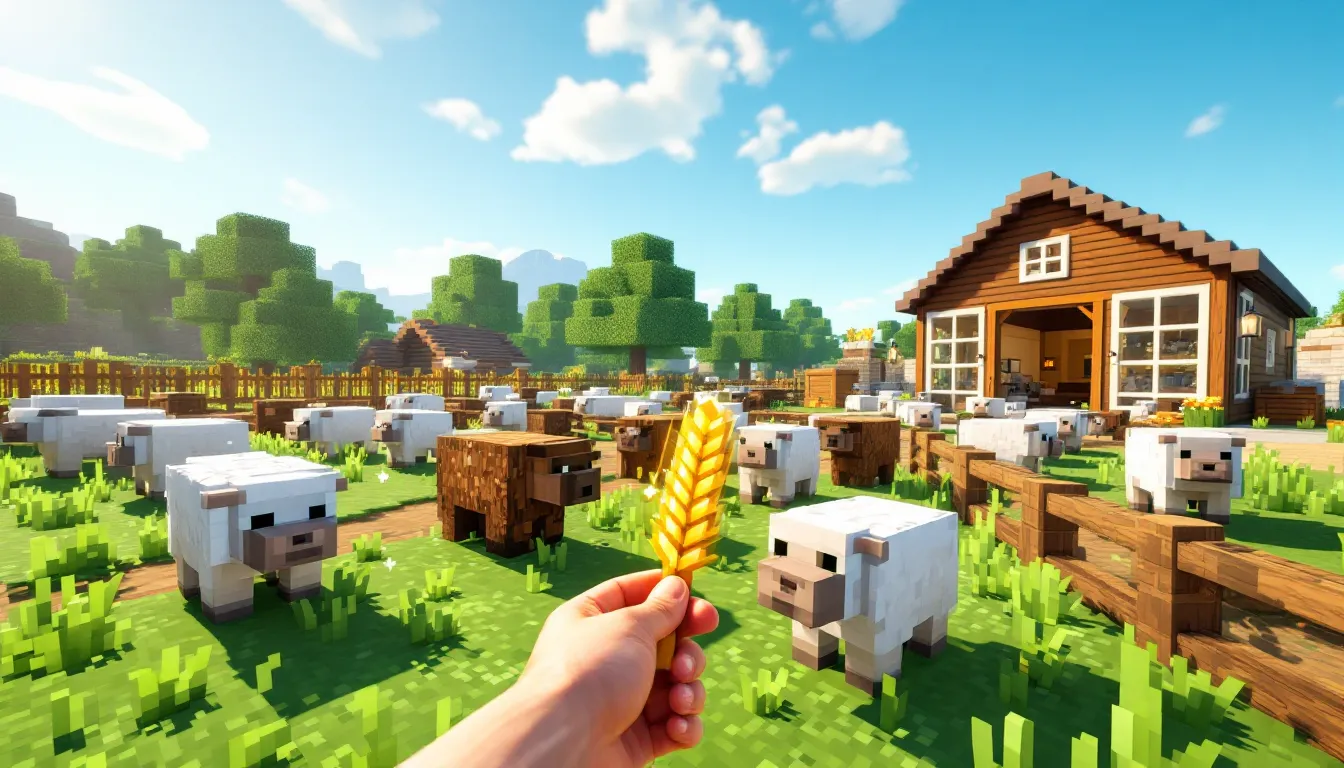
Sheep are one of the most useful passive mobs in Minecraft, providing a renewable source of wool for building, crafting, and decoration. But keeping them healthy, breeding them efficiently, and maintaining a productive wool farm requires understanding their diet and behavior. Whether you’re new to Minecraft or optimizing a massive wool operation, knowing what sheep eat and how they use food is essential.
This guide breaks down everything about sheep nutrition in Minecraft, from the grass blocks they forage on to the wheat you’ll hand-feed for breeding. We’ll cover feeding mechanics, wool regeneration, farm design, and advanced management strategies to help you run a sustainable sheep operation across Java and Bedrock editions (as of 2026).
Table of Contents
ToggleKey Takeaways
- Sheep eat grass to regenerate wool after shearing and wheat when hand-fed by players for breeding, making these the only two food sources in Minecraft.
- Grass blocks must have adequate lighting (level 9+) and space to regenerate naturally, so pen design should include mixed grass-dirt floors to sustain wool production.
- Breeding sheep requires two adults, two wheat, and proximity within 8 blocks; baby sheep mature in 20 minutes but can be accelerated by feeding them wheat.
- Avoid common mistakes like building grass-less pens or overstocking sheep beyond grass regeneration capacity, which halts wool production and creates management problems.
- Color-sorting sheep farms maximize efficiency by separating wool colors into dedicated pens, eliminating the need to dye wool after shearing.
- Automated wool farms using dispensers, redstone clocks, and hoppers can dramatically increase production, but still require grass blocks for sheared sheep to regenerate wool.
Understanding Sheep Behavior and Diet Basics
Sheep in Minecraft have a dual-food system. They autonomously forage on grass blocks to restore wool after shearing, and players can hand-feed them wheat to trigger breeding. Unlike carnivorous mobs that hunt or passive mobs that don’t interact with food at all, sheep occupy a middle ground, they’re self-sufficient grazers that respond to player input when it benefits you.
Understanding this split is key to managing sheep farms. You don’t need to feed sheep constantly to keep them alive, they won’t starve or take damage from hunger. Instead, their diet revolves around wool production and reproduction.
How Sheep Foraging Works in Minecraft
Sheep will periodically lower their heads and eat grass from grass blocks beneath them. This is an automatic behavior: you don’t need to do anything to trigger it. The animation is brief, the sheep’s head dips, particles appear, and the grass block turns into dirt.
This foraging action serves one purpose: restoring wool after the sheep has been sheared. A freshly sheared sheep will eventually eat grass and regrow its wool coat, allowing you to shear it again. The process takes a few seconds once the sheep initiates the eating animation.
Sheep won’t eat grass unless they need to restore wool. If a sheep already has its wool, it won’t forage, even if standing on grass blocks. This means you’ll only see grazing behavior after shearing.
The Role of Grass Blocks in Sheep Survival
Grass blocks are essential infrastructure for any wool farm. Without them, sheared sheep remain wool-less indefinitely. In early-game setups or temporary pens, players sometimes forget to include grass, leaving sheep unable to regenerate.
Grass blocks regenerate naturally when adjacent to other grass blocks and exposed to sufficient light (light level 9 or higher). Dirt blocks next to grass will slowly convert back into grass, creating a self-renewing grazing area. For large-scale farms, ensuring grass spreads throughout the pen is critical, overstocking a small area can strip all grass faster than it regenerates, creating a dirt wasteland.
Sheep don’t require grass to stay alive, but without it, your wool production halts. Plan pen size and sheep density accordingly.
What Sheep Eat: The Complete Food List
Sheep have a simple menu in Minecraft. Unlike some mobs with varied diets, sheep interact with only two food sources: wheat (player-fed) and grass (self-foraged). There are no hidden foods, no alternative grains, and no special treats.
This simplicity makes sheep farming accessible, but it also means you need a reliable wheat supply if you plan to breed them in any volume.
Wheat: The Primary Food for Player Interaction
Wheat is the only item players can feed to sheep manually. Hold wheat in your hand, approach a sheep, and right-click (or tap/press the interact button depending on platform). The sheep will consume the wheat, and hearts will appear above its head if it enters Love Mode (ready to breed).
Wheat is crafted from harvested wheat crops, which grow from wheat seeds planted on farmland. Seeds are obtained by breaking tall grass or harvesting mature wheat. A single wheat item is consumed per sheep, so breeding a pair requires two wheat total.
Wheat doesn’t heal sheep or provide any benefit outside of breeding. Feeding a sheep that isn’t ready to breed wastes the wheat, it’ll eat it, but nothing happens. Always check if the sheep is an adult and hasn’t been bred recently (indicated by the presence of hearts when you hold wheat near it).
Grass and Its Regenerative Properties
Grass isn’t an item, it’s a block-based food source sheep consume automatically. When a sheep eats a grass block, that block becomes dirt, and the sheep regrows its wool if it was previously sheared.
Grass regenerates through block spread. Dirt adjacent to grass blocks will convert into grass over time, provided it has access to light. This means well-lit pens with mixed grass and dirt will self-heal after sheep graze, creating a sustainable loop.
In enclosed farms, especially underground or roofed setups, light becomes critical. Grass won’t spread in complete darkness, so torches, lanterns, or natural skylight are necessary. Many wool farm designs incorporate lighting schemes to maximize grass regeneration rates, ensuring sheared sheep can regrow wool quickly.
How to Feed Sheep in Minecraft
Feeding sheep is straightforward, but there are nuances that impact efficiency, especially when you’re breeding dozens at once or managing a color-sorted operation.
Step-by-Step Feeding Process
- Obtain wheat. Harvest it from a wheat farm or find it in village chests. You’ll need two wheat per breeding pair.
- Equip the wheat. Hold it in your main hand (hotbar slot).
- Approach the sheep. Get within a few blocks. If the sheep is ready to breed, hearts will appear when you’re close enough.
- Right-click (PC), press L2/LT (console), or tap (mobile/touchscreen) on the sheep. The sheep consumes the wheat, and hearts swirl above it.
- Repeat with a second sheep nearby. Once two sheep in proximity are both in Love Mode, they’ll move toward each other and produce a baby sheep.
Feeding is instant. There’s no delay or animation beyond the heart particles. If you’re breeding multiple pairs, you can spam-feed sheep in quick succession as long as you have enough wheat.
Recognizing When Sheep Are Ready to Eat
Sheep must meet two conditions to accept wheat:
- Adult status. Baby sheep won’t eat wheat. Wait until they mature (about 20 minutes real-time, or 1 Minecraft day).
- Breeding cooldown expired. After breeding, sheep enter a cooldown period of 5 minutes before they can breed again. During this time, they’ll eat wheat but won’t enter Love Mode.
Visually, you can test readiness by holding wheat near the sheep. If hearts appear, it’s ready. If nothing happens, it’s either a baby or on cooldown. This quick check saves wheat and time when managing large herds.
Breeding Sheep Using Wheat
Breeding is the core reason to feed sheep wheat. It’s how you expand herds, create color variations, and scale up wool production for massive builds or banner crafting.
Breeding Mechanics and Requirements
To breed sheep, you need:
- Two adult sheep in close proximity (within about 8 blocks).
- Two wheat (one per sheep).
- Enough space for the baby to spawn. Cramped pens can prevent breeding if there’s no room.
Feed both sheep wheat. They’ll enter Love Mode (hearts appear), pathfind toward each other, and touch. A baby sheep spawns between them. The parents then enter a 5-minute cooldown before they can breed again.
Baby sheep inherit color from their parents (details below). They drop nothing if killed, so it’s always better to wait for them to grow into adults.
Understanding Baby Sheep Growth and Acceleration
Baby sheep take 20 minutes (1 full Minecraft day) to mature into adults. During this time, they’re smaller, can’t be sheared, and won’t breed. They follow their parents and can fit through 1-block-tall gaps, which can be exploited in some farm designs to separate adults from juveniles.
You can accelerate growth by feeding baby sheep wheat. Each wheat reduces remaining growth time by 10%. Feeding a baby sheep 10 wheat will instantly mature it. This is useful when you need rapid expansion, say, breeding a specific color or quickly scaling a new farm. But, wheat invested in growth acceleration is wheat not used for breeding, so balance your resources based on goals.
Baby sheep don’t need food to survive. They’ll mature on their own even if you never feed them.
Color Inheritance and Wool Planning
Wool color inheritance follows specific rules:
- If both parents are the same color, the baby is that color.
- If parents are different colors, the baby will be one of the two parent colors (50/50 chance).
- Exception: Breeding certain color combinations produces a mixed color. For example, breeding a white sheep and a black sheep can produce a gray sheep if the game’s RNG allows a “blend” result (though this is rare and situational).
For dye-efficient farms, separate sheep by color. Keep white sheep in one pen, black in another, etc. This prevents unwanted color mixing and lets you harvest specific wool colors on demand. Many players keep a “rainbow pen” of all 16 colors for decoration projects, while maintaining mono-color pens for bulk production.
If you’re hunting rare colors like pink or cyan sheep (which spawn naturally at very low rates), breeding them together ensures babies are also that color, letting you build a sustainable supply without relying on RNG spawns.
Wool Regeneration After Shearing
Shearing a sheep with shears drops 1–3 wool blocks and leaves the sheep naked. The sheep doesn’t take damage or die, it just loses its coat. To regrow wool, the sheep must eat grass.
How Eating Grass Restores Wool
After shearing, sheep will autonomously seek out and eat grass blocks. The moment they complete the eating animation, their wool instantly regrows. There’s no timer or multi-step process, one grass consumption equals full wool restoration.
If a pen has no grass blocks (only dirt, stone, or other materials), sheared sheep remain wool-less until grass is introduced. This is a common mistake in hastily built pens. Always ensure at least some grass blocks are present, or your wool output will stall.
Sheep won’t eat grass unless they’re missing wool. Once regrown, they ignore grass blocks until sheared again. This self-regulating behavior means you don’t need to manage grazing manually, just provide the blocks.
Creating Optimal Grazing Areas for Wool Farms
Efficient wool farms balance sheep density with grass availability. Overstocking a small pen leads to grass blocks being consumed faster than they can regenerate, turning the pen into a dirt pit. Understocking wastes space and limits wool output.
Optimal grazing setups include:
- Mixed grass/dirt floors. Don’t use solid grass, leave some dirt so grass can spread and regenerate continuously.
- Adequate lighting. Grass spreads only in light. Torches, glowstone, or skylights keep regeneration active.
- Sectioned pens. Rotate sheep between pens, giving grass time to regrow in one section while sheep graze in another. This mirrors real-world rotational grazing.
- Hopper minecarts or water channels. For farms using dispensers to auto-shear (via redstone contraptions), ensure sheared sheep can still access grass. Some designs isolate sheep above hoppers, requiring grass platforms or manual feeding.
Players focused on maximizing wool output often design multi-level farms with grass platforms at each tier, ensuring every sheep has constant grass access. Redstone-automated farms can shear hundreds of sheep per hour if grass regeneration keeps pace.
Building an Efficient Sheep Farm
A well-designed sheep farm balances space, automation, and resource efficiency. Whether you’re building a simple pen or a redstone-powered wool factory, the principles remain consistent.
Farm Design Essentials for Maximum Wool Production
Key elements of an efficient sheep farm:
- Fenced perimeter. Use fences or walls at least 2 blocks high to prevent sheep from escaping. Sheep can’t jump fences, so standard fence height is sufficient.
- Grass floor with lighting. Ensure grass blocks cover at least 50% of the floor, with torches or other light sources to maintain grass spread.
- Gate access. Place a fence gate for easy entry/exit without letting sheep escape.
- Water source (optional). Some designs use water channels to push sheep into shearing areas or sorting mechanisms.
- Color-coded sections. If you’re farming multiple colors, divide the pen into labeled sections (signs help). This prevents color mixing and speeds up targeted harvesting.
For manual farms, a simple 10×10 fenced area with grass and a few sheep is enough to generate wool for early-game needs. For industrial-scale operations, multi-chamber designs with redstone dispensers, observer blocks, and hopper collection systems can automate shearing and sorting.
Wheat Farming to Support Your Sheep Operation
Breeding sheep at scale demands a steady wheat supply. A small 9×9 wheat farm (with a water source in the center) yields about 80–90 wheat per harvest, enough to breed 40–45 pairs of sheep. For larger operations, automate wheat farming using villagers (farmer villagers will plant and harvest wheat) or build multi-level farms with water and hopper collection.
Wheat grows in 8 stages under sufficient light (light level 9+). Bone meal can instantly mature wheat, useful when you need a quick breeding burst. Some players keep a chest of bone meal near their sheep farm for emergency breeding sessions.
Alternatively, raid village farms or loot dungeon chests for wheat. Villages often have pre-grown wheat fields you can harvest, though this isn’t sustainable long-term.
Automating Wool Collection and Storage
Fully automated wool farms use dispensers loaded with shears, activated by redstone clocks or observer blocks. When triggered, dispensers shear nearby sheep, and wool drops are collected by hoppers beneath the pen, funneling into chests.
Basic automation setup:
- Build a pen with a grass floor and a hopper layer underneath (use slabs or trapdoors to let sheep stand above hoppers).
- Place dispensers facing the sheep, loaded with shears. Shears have durability (238 uses), so stock multiple pairs.
- Connect dispensers to a redstone clock (e.g., observer + piston, or repeater loop) set to trigger every few minutes.
- Route hopper output to a chest or sorting system.
Advanced designs incorporate item filters to separate wool colors or use note blocks to alert players when chests are full. Some farms even integrate sheep breeding automation, using villagers to trade wheat and maintain breeding cycles, though this requires complex redstone and villager mechanics.
Common Mistakes When Feeding and Caring for Sheep
Even experienced players occasionally overlook details that cripple sheep farm efficiency. Avoiding these pitfalls saves time and resources.
Insufficient Grass Block Access
The single biggest mistake is building a pen without grass blocks. Sheared sheep in grass-less pens stay naked forever, halting wool production. Always include grass, and ensure it can regenerate.
Another variant: too many sheep, too little grass. If you cram 50 sheep into a 5×5 pen, they’ll strip all grass instantly, faster than it can spread. Match sheep count to pen size, a good rule is 1 sheep per 4–6 blocks of floor space for sustainable grazing.
Dark pens also kill grass regeneration. If your farm is underground or roofed without lighting, grass won’t spread. Add torches, sea lanterns, or jack o’lanterns to maintain light levels.
Overbreeding Without Proper Resources
Breeding sheep without a wheat stockpile or adequate pen space creates chaos. Baby sheep clutter the pen, making it hard to shear adults or feed specific sheep. Worse, if you breed faster than you can shear, sheep population explodes, causing lag (especially on weaker hardware or servers).
Set breeding goals. If you need 20 sheep for a project, breed 20, then stop. Don’t spam-breed just because you have wheat, it wastes resources and creates management headaches.
Also, remember breeding cooldowns. Feeding a sheep on cooldown wastes wheat. Wait 5 minutes between breeding cycles, or rotate to other sheep while cooldowns expire.
Advanced Sheep Management Tips
Once your farm is running smoothly, these advanced techniques can optimize output and organization.
Organizing Sheep by Color for Dye Efficiency
Separating sheep by wool color eliminates the need to dye wool after shearing. Instead of shearing white sheep and dyeing wool blocks, breed and maintain dedicated flocks of each color.
Color-coded pens save dye (which requires flowers, ink sacs, lapis, etc.) and time. For example, a black sheep pen provides black wool on-demand for builds requiring dark blocks, while a yellow sheep pen supplies wool for banners or concrete powder crafting.
Use signs to label pens: “White Sheep,” “Red Sheep,” etc. For extra organization, arrange pens in rainbow order (matching dye color progression) or by frequency of use.
Some players breed one of each color and keep them in a single “display pen,” then clone specific colors into dedicated production pens as needed. This maintains genetic diversity while keeping production streamlined.
Using Name Tags to Prevent Despawning
Sheep don’t naturally despawn, even without name tags. Unlike hostile mobs or some passive mobs, sheep are persistent once spawned or bred. But, name tags still serve purposes:
- Identification. Name tags let you label specific sheep (e.g., “Breeder 1,” “Pink Female”) for tracking breeding pairs or rare colors.
- Preventing accidental loss. In multiplayer servers or accidental chunk resets, named mobs have better persistence.
- Aesthetics. Some players enjoy naming sheep after favorite characters, inside jokes, or color puns (“Jeb_” for the rainbow easter egg).
To name a sheep, craft a name tag (found in dungeon chests, fishing, or trading with librarian villagers), rename it using an anvil, then right-click the sheep. Named sheep display their name above their head when you look at them.
One famous trick: naming a sheep “jeb_” (case-sensitive, with underscore) causes its wool to cycle through all colors in a rainbow animation. This is purely cosmetic, shearing still yields the sheep’s actual color wool, but it’s a fun easter egg for decoration.
Conclusion
Sheep are one of Minecraft’s most reliable renewable resources, offering endless wool for building, crafting, and decoration. Their simple diet, wheat for breeding, grass for wool regeneration, makes them accessible even for beginners, while their breeding mechanics and farm automation potential provide depth for veteran players optimizing industrial-scale operations.
Whether you’re hand-feeding a few sheep in a starter pen or engineering a redstone-powered wool factory sorted by color, the fundamentals remain the same: provide grass blocks for regeneration, stockpile wheat for breeding, and design pens that balance space, light, and sheep density. Avoid common mistakes like grass-less pens or overbreeding, and consider advanced strategies like color sorting or automation to maximize efficiency.
With this guide, you’ve got everything you need to run a sustainable, productive sheep farm in Minecraft 2026. Now get out there, grow some wheat, and start building that rainbow wool collection.