
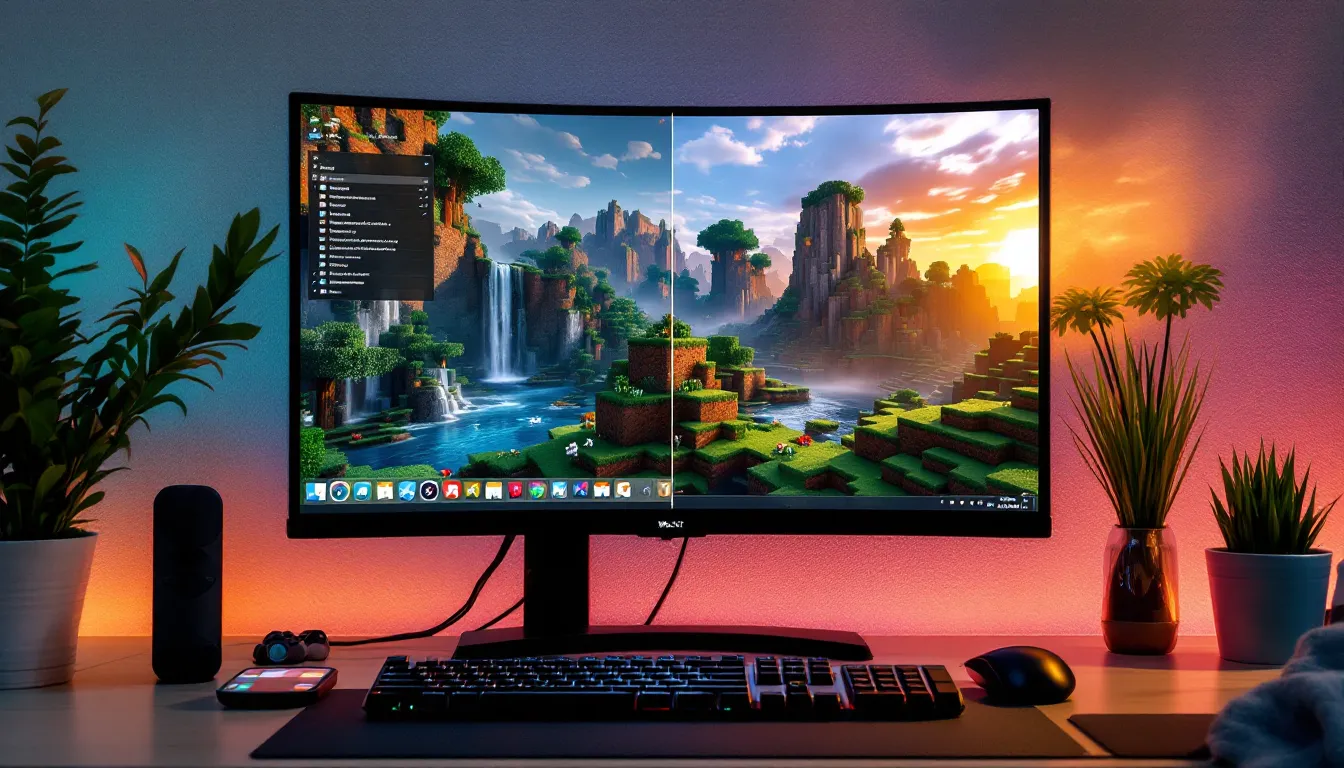
Minecraft’s visual identity is iconic, those chunky blocks, that distinct pixel art aesthetic. But after years of mining and building, even the most dedicated players crave a fresh coat of paint. That’s where resource packs come in. Unlike mods that overhaul mechanics and add complex systems, resource packs offer a simpler, safer way to transform your game’s look and sound without touching a single line of code.
Whether you’re after hyper-realistic textures that make grass look photographic, a minimalist overhaul for buttery-smooth performance, or just want to swap out the default sounds for something fresh, resource packs deliver. They work on both Java and Bedrock editions, don’t interfere with achievements, and won’t get you flagged on servers. In 2026, the resource pack ecosystem is more robust than ever, with thousands of options ranging from subtle tweaks to total visual overhauls.
This guide breaks down everything: what resource packs actually are, how they differ from mods, where to grab them safely, and which packs are worth your time in 2026. We’ll also walk through installation on both editions and cover common troubleshooting so you’re not stuck staring at purple-and-black checkerboards.
Table of Contents
ToggleKey Takeaways
- Resource packs transform Minecraft’s appearance by replacing textures, sounds, and UI elements without modifying game mechanics, making them safer and simpler than mods for visual customization.
- Popular resource packs like Faithful, Mizuno’s 16 Craft, and Bare Bones offer diverse styles ranging from high-resolution realism to minimalist design, all actively maintained for current Minecraft versions in 2026.
- Installing resource packs is straightforward on both Java and Bedrock editions—simply download the .zip file, place it in the resourcepacks folder, and activate it in-game without needing mod loaders.
- Resource packs can be stacked and prioritized to mix visual features from multiple packs, and they don’t disable achievements or conflict with vanilla servers, unlike gameplay mods.
- Creating your own custom resource pack requires only basic image editing and file management skills, with free tools like GIMP and Blockbench available to get started with texture editing and model creation.
- Common resource pack issues like missing textures and compatibility errors are typically resolved by verifying version matching, checking file naming accuracy, and consulting community forums for troubleshooting support.
What Are Minecraft Resource Packs?
Resource packs are customizable file bundles that swap out Minecraft’s default textures, sounds, fonts, and UI elements with alternatives. Think of them as skins for your entire game world. They don’t add new mechanics, items, or gameplay features, they just change how things look and sound.
A resource pack contains assets organized in specific folders: textures for blocks and items, sounds for ambient noise and music, fonts for in-game text, and models that define how objects appear in 3D space. When you activate a resource pack, Minecraft reads these files instead of its defaults.
The beauty of resource packs is their flexibility. You can stack multiple packs, prioritizing one over another to mix and match features. Want realistic grass from one pack but prefer another’s UI? Stack them in the right order and you’re set.
How Resource Packs Differ from Mods
This is where confusion kicks in. Resource packs and mods both customize Minecraft, but they operate on fundamentally different levels.
Resource packs replace assets only. They don’t change game code, add new blocks, alter mechanics, or introduce custom entities. Installation is drag-and-drop simple, and they work in vanilla Minecraft without third-party loaders. They’re also cross-compatible with servers, if a server allows custom resource packs, you can use yours without issue. Achievements remain enabled, and performance impact is minimal unless you’re running ultra-high-resolution textures.
Mods, by contrast, rewrite or expand the game’s code. They add new items, mobs, dimensions, gameplay systems, and mechanics. Installing mods requires a mod loader like Forge or Fabric (as explained in guides on installing gameplay modifications), and they can conflict with each other or break when Minecraft updates. Mods often disable achievements in Java Edition and aren’t compatible with most vanilla servers.
In short: resource packs change appearance, mods change functionality. Many players use both, layering visual upgrades from resource packs over gameplay enhancements from mods.
Why Use Resource Packs in Minecraft?
Resource packs solve a simple problem: visual fatigue. After hundreds of hours in the same blocky world, default textures start to feel stale. But beyond cosmetic refreshment, resource packs offer tangible benefits depending on what you choose.
Enhanced Visual Experience
The most obvious reason to use resource packs is aesthetics. Minecraft’s default 16×16 textures have charm, but they lack detail. Higher-resolution packs (32×32, 64×64, or even 512×512) add depth, shading, and realism that make builds pop.
Realistic packs transform grass into lush, textured fields and give stone actual weathering and grain. Stylized packs push in the opposite direction, offering cartoonish, hand-painted looks or ultra-clean minimalism. For content creators and screenshot enthusiasts, the right resource pack can elevate a build from “nice” to “stunning.”
Sound packs also matter. Swapping out ambient noises, music tracks, and mob sounds can completely shift the game’s mood. Imagine replacing the default cave ambience with something genuinely eerie, or swapping combat sounds for more impactful effects.
Performance-Friendly Customization
Not everyone has a rig capable of running shaders and dozens of mods. Resource packs offer a performance-friendly alternative for customization. A well-optimized pack can actually improve performance compared to high-res texture mods or shader packs.
Minimalist packs with simplified textures reduce visual clutter and can boost FPS on lower-end hardware. Some packs are specifically designed for PvP, offering clean, high-contrast textures that make ores and enemies easier to spot, think competitive advantage without sacrificing frames.
Unlike shaders, which demand GPU power for real-time lighting calculations, resource packs are just file swaps. The performance cost scales with resolution: a 16×16 pack has virtually zero impact, while a 512×512 pack will tax your VRAM. But even heavy packs are gentler than equivalent shader setups.
Types of Minecraft Resource Packs
Resource packs aren’t monolithic. They specialize, and knowing the categories helps you find exactly what you’re after.
Texture Packs
Texture packs are the most common type, replacing the visual appearance of blocks, items, mobs, and environments. They range wildly in style and resolution.
Resolution options:
- 16×16 (vanilla resolution): Faithful recreations or stylized alternatives that maintain vanilla performance.
- 32×32 to 128×128: The sweet spot for added detail without crushing performance. Most popular packs fall here.
- 256×256 to 512×512: Ultra-HD packs for screenshot work and high-end rigs. These require significant VRAM and may cause stuttering on weaker systems.
Style categories:
- Realistic: Photographic textures, weathering, and natural variation. Great for survival builds and immersive playthroughs.
- Fantasy/RPG: Hand-painted, medieval, or stylized textures that lean into Minecraft’s adventure side.
- Minimalist/Clean: Simplified palettes, reduced noise, often used in PvP or for visual clarity.
- Cartoonish/Whimsical: Bold colors, exaggerated shapes, playful vibes.
Sound Packs
Sound packs replace Minecraft’s audio: music tracks, ambient sounds, mob noises, block break/place sounds, and UI clicks. They’re underrated but transformative.
Some packs aim for realism (footsteps that vary by surface, realistic water flow), while others go cinematic, swapping the soundtrack for orchestral or electronic scores. Horror-themed sound packs amplify cave ambience and mob sounds for a genuinely unsettling experience.
Sound packs can stack with texture packs, letting you mix and match visual and audio aesthetics independently.
UI and Font Packs
UI packs redesign the game’s menus, inventory screens, hotbar, health/hunger bars, and crosshairs. Font packs change the in-game typeface for signs, chat, and menus.
These are often bundled with texture packs but can be standalone. Competitive players favor clean, high-contrast UIs that prioritize readability. Aesthetic-focused players might want ornate fantasy UIs or retro pixel fonts.
How to Download and Install Resource Packs
Installing resource packs is simpler than mods, but the process differs slightly between Java and Bedrock editions.
Installing on Java Edition
Step-by-step:
- Download the resource pack. Packs come as
.zipfiles. Don’t extract them, Minecraft reads the.zipdirectly. - Open Minecraft and go to Options > Resource Packs.
- Click “Open Pack Folder.” This opens your
resourcepacksdirectory. - Drag the
.zipfile into this folder. - Return to the Resource Packs menu in-game. Your new pack should appear under “Available.”
- Hover over the pack and click the arrow to move it to “Selected.” You can stack multiple packs: higher packs override lower ones.
- Click “Done.” Minecraft will reload resources, which may take a few seconds.
Java Edition supports resource packs back to version 1.6, but pack format changes between updates. A pack made for 1.20 might not work perfectly in 1.19. Many popular packs release version-specific downloads, grab the one matching your Minecraft version.
Installing on Bedrock Edition
Bedrock (Windows 10, Xbox, PlayStation, Switch, Mobile) handles resource packs slightly differently.
For Windows 10/11:
- Download the pack (usually a
.mcpackfile). - Double-click the
.mcpackfile. Minecraft will open and import it automatically. - Launch Minecraft, go to Settings > Global Resources.
- Activate the pack under “My Packs,” then click “Activate” or drag it to “Active.”
- Apply changes and restart if needed.
For consoles and mobile:
- Download the pack on a PC and transfer it via USB, cloud storage, or file-sharing app (depending on platform).
- On console/mobile, locate the
.mcpackfile in your file manager and open it with Minecraft. - Activate in Settings > Global Resources as above.
Bedrock packs may also come as .zip files. Rename to .mcpack if needed, or manually place in games/com.mojang/resource_packs/ on Android or the equivalent directory on other platforms.
Best Resource Packs for Minecraft in 2026
The resource pack scene is vast, but a few standouts have proven themselves through consistent updates and community love. Here are top picks across different styles, all actively maintained as of early 2026.
Faithful (Classic HD Enhancement)
Resolution: 32×32 (Faithful 32x) and 64×64 (Faithful 64x)
Style: Vanilla-faithful upscale
Compatibility: Java and Bedrock, updated for Minecraft 1.21+
Faithful is the gold standard for players who love vanilla Minecraft but want sharper detail. It doubles (or quadruples) resolution while preserving the original art style pixel-for-pixel. Every block, item, and mob looks exactly as Mojang intended, just crisper.
It’s perfect for veteran players who don’t want to relearn visual cues and for multiplayer servers where consistency matters. Performance impact is negligible on modern hardware. Faithful has been around since the early days of Minecraft and remains meticulously updated by a dedicated team, often within days of new Minecraft releases.
Mizuno’s 16 Craft (Realistic Textures)
Resolution: 16×16 (CIT variant available at higher res)
Style: Realistic with subtle fantasy touches
Compatibility: Java Edition, 1.20-1.21
Even though its vanilla resolution, Mizuno’s 16 Craft delivers surprising realism through clever shading and detail. Grass looks lush, stone has natural grain, and wood has visible texture, all without jumping to 32×32 or higher.
This pack strikes a balance: it’s realistic enough for immersive builds but stylized enough to avoid the uncanny “photo-texture” look. Performance is flawless even on potato PCs. It’s a go-to for survival players who want atmosphere without sacrificing frames. The pack has been featured in numerous gaming community showcases for its approachable realism.
Bare Bones (Minimalist Design)
Resolution: 16×16
Style: Ultra-clean minimalist
Compatibility: Java and Bedrock, 1.21 support
Bare Bones strips Minecraft down to its essentials. Textures are simplified, color palettes are muted, and visual noise is eliminated. It’s not just aesthetic, it’s functional. Ores stand out against stone, mobs are immediately recognizable, and builds have a crisp, architectural quality.
PvP players and builders both love Bare Bones. For competitive players, the high contrast and clean lines improve visibility. For builders, the minimalist palette lets structure and form take center stage without texture distraction. It’s also exceptionally light on resources, making it ideal for older hardware or crowded servers.
Jolicraft (Cartoonish Style)
Resolution: 16×16
Style: Hand-painted, whimsical, cartoonish
Compatibility: Java Edition, 1.20+
Jolicraft is pure charm. Every texture looks hand-drawn with bold outlines, saturated colors, and playful details. It transforms Minecraft into something closer to a children’s storybook illustration.
This pack is polarizing, you’ll either adore the aesthetic or find it too cutesy. But for creative servers, family-friendly content, or players who enjoy cozy, lighthearted vibes, it’s unmatched. Performance is excellent, and the style lends itself beautifully to fantasy or fairy-tale builds. Jolicraft has been a community favorite since 2011, with continuous updates keeping it relevant.
Where to Find Safe and Quality Resource Packs
Not all download sites are created equal. Sketchy third-party hosts often bundle malware, outdated packs, or stolen content re-uploaded without credit. Stick to trusted sources.
Recommended platforms:
- Planet Minecraft: The largest community repository for resource packs. User ratings, comments, and update histories make it easy to vet quality. Always check upload dates and version compatibility.
- CurseForge: Best known for mods, but also hosts a curated selection of resource packs. Files are scanned for malware, and version tagging is reliable.
- Official creator sites/GitHub: Many pack creators host on their own sites or GitHub repos (e.g., Faithful’s official site). This guarantees you’re getting the authentic, latest version.
- r/Minecraft and r/minecraftsuggestions (Reddit): Community discussion often surfaces hidden gems and flags outdated or broken packs.
Red flags to avoid:
- Sites requiring surveys, app downloads, or suspicious “download managers” before letting you grab a file.
- Packs hosted on file-sharing sites like MediaFire or MEGA without an official creator link.
- Extremely outdated packs (2+ years without updates) that claim to work on current versions, they often cause texture bugs.
- “Repack” or “edited” versions uploaded by someone other than the original creator, unless explicitly endorsed.
While platforms like Nexus Mods are excellent for modding communities, Minecraft resource packs are less commonly hosted there compared to dedicated Minecraft sites. Still, it’s worth checking for niche or experimental packs.
Always read comments and reviews. If a pack has dozens of reports about missing textures or crashes, move on. Legitimate creators respond to bugs and update regularly, that’s the mark of a quality pack.
Creating Your Own Custom Resource Pack
Building your own resource pack is easier than you’d think, and it’s the ultimate customization. You don’t need to be an artist, basic image editing and file management are enough to get started.
Essential Tools and Software
You’ll need a few tools to create and manage your resource pack:
Image editors:
- GIMP (free, open-source): Handles layers, transparency, and pixel art well.
- Paint.NET (free, Windows): Simpler than GIMP, great for beginners.
- Aseprite (paid, ~$20): Purpose-built for pixel art, excellent for animating textures.
- Photoshop (subscription): Overkill for most users, but powerful if you already have it.
Text editors:
- VS Code or Notepad++: For editing JSON files that control models, animations, and metadata.
Minecraft tools:
- Blockbench (free): A 3D modeling tool for creating custom block and item models. Exports directly to Minecraft-compatible JSON.
- MCreator (free): More focused on mods, but includes resource pack creation features.
File management:
- A
.ziparchiving tool (WinRAR, 7-Zip, or built-in OS tools) to package your pack.
Basic Steps to Get Started
- Grab the default resource pack as a template. Mojang provides the vanilla assets as a downloadable
.jaror.zip(found in your Minecraft installation or on the official wiki). Extract it to see the folder structure. - Create a new folder for your pack. Name it something memorable (e.g., “MyCustomPack”).
- Add a
pack.mcmetafile. This JSON file tells Minecraft about your pack:
{

"pack": {

"pack_format": 15,

"description": "My awesome custom pack"

}

}
pack_format changes with Minecraft versions, check the official wiki or community guides for the current number.
- Organize your assets. Create folders matching the vanilla structure:
assets/minecraft/textures/block/,assets/minecraft/sounds/, etc. - Edit or replace textures. Open a vanilla texture (e.g.,
dirt.png) in your image editor, modify it, and save it in the corresponding folder in your pack. Keep resolution and file naming exact. - Test frequently. Drop your pack folder (as a
.zip) into yourresourcepacksdirectory and activate it in-game. Iterate on textures until they look right. - Add a pack icon. Include a
pack.png(64×64 or higher) in the root of your pack folder for a custom thumbnail.
For advanced customization, custom models, animated textures, or sound replacements, jump into JSON editing and Blockbench tutorials. The Minecraft wiki and community forums are invaluable resources.
Creating a pack from scratch is time-intensive, but you can also frankenstein existing packs (with proper credit) or focus on a few textures you care about most.
Troubleshooting Common Resource Pack Issues
Resource packs are usually plug-and-play, but you’ll occasionally hit snags. Here’s how to diagnose and fix the most common problems.
Resource Pack Compatibility and Version Matching
Minecraft updates frequently, and each update can change the resource pack format. A pack built for 1.19 might not work correctly in 1.21 due to new blocks, renamed files, or format changes.
Symptoms:
- Missing textures (purple-and-black checkerboards or default textures where custom ones should appear).
- Error messages when activating the pack.
- Game crashes or slow loading.
Fixes:
- Check the pack’s supported version. Most creators list this on the download page. If it’s outdated, look for an updated release or community port.
- Use a version-appropriate pack. Sites like Planet Minecraft and CurseForge often have multiple downloads for different Minecraft versions.
- Manually update the pack. If you’re comfortable editing files, update the
pack_formatnumber inpack.mcmetaand replace missing textures with vanilla or custom alternatives. This requires comparing the pack’s structure to the current vanilla assets.
Some packs offer “universal” versions that gracefully degrade on older or newer versions, but these are rarer.
Missing Textures and Visual Glitches
Even with a compatible pack, you might see:
- Purple-and-black checkerboards: Minecraft’s fallback when a texture is missing or incorrectly named.
- Transparent or invisible blocks/items.
- Incorrect textures (e.g., dirt showing up as stone).
Common causes and solutions:
- File naming errors: Texture filenames must exactly match vanilla names (e.g.,
oak_log.png, notOak_Log.pngoroaklog.png). Case sensitivity matters on some systems. - Incorrect folder structure: Textures must be in the right subdirectory (e.g.,
assets/minecraft/textures/block/stone.png). One misplaced folder breaks everything. - Corrupted download: Re-download the pack. If the
.zipis incomplete or corrupted, extraction or loading will fail. - Resource pack stacking conflicts: If multiple packs modify the same texture, the top pack in your “Selected” list wins. Reorder packs to prioritize the one you want.
- Outdated OptiFine/shaders: If using OptiFine (Java Edition), ensure it’s updated for your Minecraft version. Old OptiFine builds can mishandle custom textures.
Debugging steps:
- Test the pack alone (disable all other packs and mods).
- Check the game output log (found in
.minecraft/logs/latest.log) for error messages referencing missing files. - Compare your pack’s folder structure to vanilla assets or a known-working pack.
- If using a self-made pack, validate your
pack.mcmetaJSON syntax with an online JSON validator.
For persistent issues, community forums and the pack creator’s support channels (Discord, Reddit, or comment sections) are goldmines. Odds are someone else hit the same problem and found a fix.
Conclusion
Resource packs are the easiest, safest way to personalize Minecraft without touching game code or risking mod conflicts. Whether you’re chasing photorealism, craving a minimalist aesthetic, or just want to breathe new life into a world you’ve explored for years, there’s a pack out there for you.
The 2026 ecosystem is healthier than ever. Major packs like Faithful, Mizuno’s 16 Craft, and Bare Bones are actively maintained, and the community continues to churn out creative alternatives. Installation is straightforward on both Java and Bedrock, troubleshooting is manageable with a bit of patience, and creating your own pack is an achievable project for anyone willing to learn.
Start simple: grab a popular pack, see how it feels, then experiment. Stack packs, mix textures, tweak a few files yourself. Minecraft’s beauty is its flexibility, and resource packs are one of the best ways to make the game truly yours.