The Kinect sensor was Microsoft’s bold gamble on a controller-free future, one where you were the controller. Launched with massive hype and some genuinely innovative tech, it promised a gaming revolution. Flash forward to 2026, and Kinect has officially transitioned from cutting-edge peripheral to nostalgic curiosity. But here’s the thing: if you’ve got a dusty sensor sitting in your closet or you’re hunting for one online, there’s still a surprisingly deep library of games worth exploring.
Whether you’re looking to relive the motion-controlled magic, get a surprisingly solid workout, or just want to see what all the fuss was about, this guide covers everything. From the biggest hits to overlooked gems, plus how to actually find and set up Kinect games in 2026, we’ve got you covered.
Table of Contents
ToggleKey Takeaways
- Xbox Kinect games offer a surprisingly deep library of motion-controlled entertainment, from Dance Central to fitness experiences, that remain enjoyable in 2026 despite the sensor being discontinued.
- The best Xbox Kinect games like Kinect Sports Season Two, Dance Central 3, and Fantasia: Music Evolved showcase how motion controls can deliver legitimate gameplay when properly designed for the technology.
- Finding Xbox Kinect games in 2026 is achievable through used game stores, eBay, Facebook Marketplace, and digital downloads on the Xbox Store, though prices for rare titles can reach $30-$50.
- Optimal Kinect performance requires 6+ feet of space, proper lighting (avoiding direct sunlight), fitted clothing, and calibration before play to overcome common tracking and voice recognition issues.
- Xbox Kinect games work best in social and fitness contexts rather than as replacements for traditional controllers, offering unique value for parties, family gaming, and workouts.
What Is Xbox Kinect and How Does It Work?
Xbox Kinect is a motion-sensing input device that Microsoft developed for the Xbox 360 and Xbox One. Instead of pressing buttons, you control games through body movements, gestures, and voice commands. Think Minority Report but for gaming.
The tech behind it is genuinely impressive. Kinect uses an RGB camera, depth sensor, and multi-array microphone to track skeletal movement in three dimensions. It can recognize up to six people in frame and track two active players simultaneously. The sensor maps 20 joints on your body at 30 frames per second, translating your physical movements into in-game actions.
For Xbox 360, the original Kinect featured a motorized base that adjusted the camera angle automatically. The Xbox One Kinect (sometimes called Kinect 2.0) bumped up the resolution to 1080p, improved skeletal tracking to 25 joints, and added the ability to read heart rate through subtle skin color changes. Wild stuff.
Voice commands let you navigate menus, launch games, and control playback without touching a controller. At launch, Microsoft positioned it as the future of natural user interfaces. Reality was messier, some games nailed the tech, others struggled with lag and accuracy, but when it worked, it felt legitimately futuristic.
The History of Xbox Kinect: From Launch to Legacy
Xbox 360 Kinect Era (2010-2013)
Microsoft unveiled Kinect (codenamed Project Natal) at E3 2009, and gamers lost their minds. The November 2010 launch broke records, 8 million units sold in the first 60 days, earning a Guinness World Record for fastest-selling consumer electronics device.
Kinect Adventures. shipped as the pack-in title, and it was… fine. Harmless minigame fun that showed off the tech without really pushing it. The real winners in this era were Dance Central and Kinect Sports, which proved motion controls could deliver legitimate gameplay experiences. By 2013, Microsoft had sold over 24 million Kinect sensors for Xbox 360.
The library grew quickly. Fitness games like Your Shape: Fitness Evolved and Zumba Fitness found audiences beyond traditional gamers. Family-friendly titles dominated, though hardcore gamers remained skeptical, and rightfully so, since most core franchises that shoehorned in Kinect support did it poorly.
Xbox One Kinect and Its Evolution (2013-2017)
When the Xbox One launched in November 2013, every console included a Kinect sensor. It wasn’t optional, Microsoft mandated it, driving the console’s price to $499 while PS4 launched at $399. Bad move.
The improved hardware was genuinely better. Kinect Sports Rivals, Fantasia: Music Evolved, and Dance Central Spotlight showcased what the new sensor could do. Voice commands like “Xbox, record that” became genuinely useful for capturing clips. But the forced bundle hurt Xbox One’s early adoption, and gamers revolted.
In June 2014, Microsoft unbundled Kinect and dropped the Xbox One price to $399. Sales improved, but it effectively killed developer support. By October 2017, Microsoft stopped manufacturing Kinect sensors entirely. The April 2018 discontinuation of the Kinect adapter for Xbox One S and Xbox One X was the final nail in the coffin.
Still, the tech lived on. Kinect’s depth-sensing innovations influenced everything from Windows Hello facial recognition to improved audio solutions in gaming hardware. It just turned out gamers preferred controllers.
Best Xbox Kinect Games of All Time
Top Kinect Sports and Fitness Games
Kinect Sports Season Two (Xbox 360) remains the gold standard for motion-controlled sports. The six activities, tennis, baseball, golf, darts, skiing, and football, actually felt responsive. Tennis rallies had real back-and-forth tension, and the golf swing detection was surprisingly accurate.
For fitness junkies, Nike+ Kinect Training delivered legit workouts. It included 30-plus exercises across strength, cardio, and flexibility programs designed by Nike trainers. The sensor’s ability to count reps and correct form made it feel less like a game and more like having a virtual personal trainer who occasionally got confused if you moved too fast.
UFC Personal Trainer brought mixed martial arts conditioning to your living room. Brutal cardio sessions with actual UFC fighters coaching you through routines. Not casual-friendly, but if you wanted to sweat, it delivered.
Dance Central 3 tops the rhythm game category. Harmonix nailed the choreography tracking, complex moves like body rolls and hip isolations actually registered. The soundtrack spanned decades, from Bell Biv DeVoe to Usher. According to aggregated scores on Metacritic, it holds an 83, making it one of the highest-rated Kinect titles ever.
Best Kinect Dance and Music Games
Beyond Dance Central, Just Dance (multiple entries) brought Ubisoft’s party-game energy to Kinect. The tracking was less precise than Dance Central but the song selection was unbeatable. Just Dance 2014 and 2015 featured dozens of hits and the World Dance Floor online mode.
Fantasia: Music Evolved from Harmonix was criminally underrated. You conducted and remixed music by waving your arms, manipulating songs in real-time. The setlist ranged from Queen to AVICII, and the visual feedback was gorgeous. It reviewed well but sold poorly, cementing its status as a cult classic.
Must-Play Kinect Adventure and Action Games
Kinect Adventures. gets dunked on, but it’s actually solid for what it is, a showcase of the tech with 20 Thousand Leaks and Reflex Ridge delivering frantic fun. Over 24 million copies in circulation (thanks to pack-in status) make it the best-selling Kinect game by default.
Fable: The Journey (Xbox 360) attempted a core gaming experience on rails. You controlled a horse-drawn cart through Albion using reins gestures and cast magic with hand movements. Flawed but ambitious, with genuine moments where the magic system clicked.
Fruit Ninja Kinect translated the mobile phenomenon perfectly. Slicing fruit with your hands felt satisfying, and the multiplayer modes got surprisingly competitive. Simple concept, flawless execution.
Gunstringer from Twisted Pixel was a weird, wonderful puppet-western shooter. You controlled a vengeful marionette with one hand and aimed with the other. The FMV intermissions and dark humor set it apart from typical Kinect fare.
Family-Friendly and Party Kinect Games
Kinectimals let kids play with virtual exotic animals. Tigers, cheetahs, and pandas responded to voice commands and gestures. Adorable, low-stakes fun that actually worked well for younger players.
Disneyland Adventures (Xbox 360, remastered for Xbox One) transformed Disneyland into an explorable theme park. You high-fived characters, played minigames, and experienced attractions. The remaster dropped Kinect requirement but the original used it extensively. Parents loved it.
Sesame Street: Once Upon a Monster from Double Fine proved Tim Schafer could make Kinect games work. Co-op gameplay encouraged kids and parents to move together, and the production values matched Sesame Workshop’s standards.
Reports from Pure Xbox highlighted how these family titles often had longer legs than core games, maintaining steady player bases years after launch.
Hidden Gems and Underrated Kinect Titles
Kung-Fu High Impact from Ubisoft let you import your photo and star in a side-scrolling beat-’em-up. Punch and kick enemies that appear to interact with your digitized body. Gimmicky? Absolutely. But also stupid fun with friends.
Fighters Uncaged gets hate, but if you calibrated it properly (big if), it delivered a surprisingly deep striking system. The problem was most people’s setups couldn’t handle the precision required.
Motion Sports flew under the radar compared to Kinect Sports, but the hang gliding and horseback riding events were genuinely enjoyable. Less polish, more variety.
Boom Ball for Kinect (Xbox One) was a 2016 late-generation surprise. A physics-based puzzle game where you use your body to direct a ball through Rube Goldberg-style levels. Reviews were mixed but players who tried it appreciated the creativity.
Happy Action Theater from Double Fine was pure experimental joy. No scores, no goals, just 18 activities like controlling lava, making fireballs, or becoming a giant stomping through a city. Kids absolutely loved it, and the free-form nature meant it worked for all skill levels.
The Gunstringer: Dead Man Running was a companion game that proved side-scrolling auto-runners could work on Kinect. Ridiculous premise, tight execution, practically free (240 Microsoft Points originally).
Where to Find Xbox Kinect Games in 2026
Physical Copies and Retail Options
In 2026, brick-and-mortar hunting for Kinect games means hitting used game stores, pawn shops, and retro gaming retailers. GameStop phased out most 360 and early Xbox One inventory years ago, but local independent shops often have bins of cheap Kinect titles.
eBay and Amazon Marketplace remain your best bets for specific titles. Prices vary wildly, shovelware goes for under $5, while sealed copies of games like Fantasia: Music Evolved or Dance Central 3 can hit $30-$50 due to collector interest.
Facebook Marketplace and Craigslist sometimes feature lot sales where someone dumps their entire Kinect collection. You’ll get duplicates and junk, but occasionally score something good for pennies per game.
Thrift stores (Goodwill, Salvation Army) are wildly inconsistent but worth checking. Kinect games show up periodically as parents purge old gaming gear. Expect lots of Kinect Adventures. and Kinect Sports.
Digital Downloads and Backward Compatibility
The Xbox Store still sells digital versions of many Kinect games for both 360 and Xbox One systems. Dance Central Spotlight, Fruit Ninja Kinect 2, and Fantasia: Music Evolved remain available for purchase and download.
Backward compatibility is your friend. Many Xbox 360 Kinect games run on Xbox One via BC, though you’ll need the Kinect sensor and adapter (discontinued, now expensive on secondhand markets). Xbox Series X
|
S doesn’t support Kinect at all, no adapter exists.
Coverage from Windows Central has tracked the slow removal of Kinect titles from digital storefronts. Some delisted games included licensed titles like Zumba Fitness and licensed Disney games once publishing agreements expired. If you want something, grab it before it vanishes.
Game Pass never featured Kinect titles prominently, and none remain in the current catalog. Microsoft clearly moved on.
Setting Up Your Xbox Kinect for Optimal Performance
Space Requirements and Room Setup
Kinect needs space, more than you probably think. For Xbox 360 Kinect, Microsoft recommended 6-8 feet between you and the sensor for single player, 8-10 feet for two players. In practice, 7 feet was the sweet spot.
Xbox One Kinect improved this slightly, working effectively from 4.5 feet minimum, but still preferring 6+ feet for full-body tracking. Your play space should be at least 6 feet wide to accommodate arm movements without punching furniture.
Lighting matters more than most people realize. Avoid direct sunlight or bright backlighting, Kinect’s depth sensor uses infrared, which sunlight floods with noise. Overhead or side lighting works best. Don’t play in the dark either: the RGB camera needs some ambient light.
Room layout: Sensor should be centered on your TV, either mounted above or placed below at a slight upward angle. Remove obstacles between you and the sensor. That coffee table? Move it. That curious cat? Evict it temporarily.
Calibration and Troubleshooting Common Issues
Run the Kinect Tuner (Xbox 360) or Kinect calibration tool (Xbox One) before playing. This audio calibration accounts for room acoustics and helps voice recognition. It takes three minutes and drastically improves performance.
For tracking issues:
- “Kinect can’t see me”: Check that nothing’s blocking the sensor. Move closer or adjust the angle using the motorized base (360) or manual tilt (One).
- Lag between movements and actions: This plagued many games and was often the software’s fault, not your setup. Try restarting the console and re-launching the game.
- Voice commands not working: Re-run audio calibration. Speak clearly and slightly louder than normal. The sensor struggled with background noise, so mute the TV or turn down game audio during voice sections.
- One player tracked, second player ignored: Make sure both players are fully in frame and not overlapping. Kinect tracked skeletons, so if it thinks you’re one person, it won’t split you.
If you’re using Xbox One S/X with an old Kinect, you’ll need the Kinect Adapter, which Microsoft discontinued in 2018. Adapters now run $50-$150 on secondary markets.
Persistent issues often traced to sensor placement too high or too low. Eye-level to the standing player worked best, or angled up slightly if floor-mounted.
Tips for Getting the Most Out of Your Kinect Gaming Experience
Dress appropriately. Seriously. Kinect tracks body shape and joint positions, so baggy clothes confuse it. Wear fitted clothing, not tight, just defined enough that the sensor can see your body structure. Avoid reflective materials or lots of logos, which can throw off the RGB camera.
Warm up before fitness games. Your Shape and Nike+ Kinect Training can be legit workouts. Stretch first. Don’t be the person who pulls a muscle trying to impress their kids in Kinect Sports.
Embrace the jank. Kinect was never perfect. Tracking hiccups happened. Part of the charm (in retrospect) was laughing when the sensor thought your knee was your hand. Roll with it.
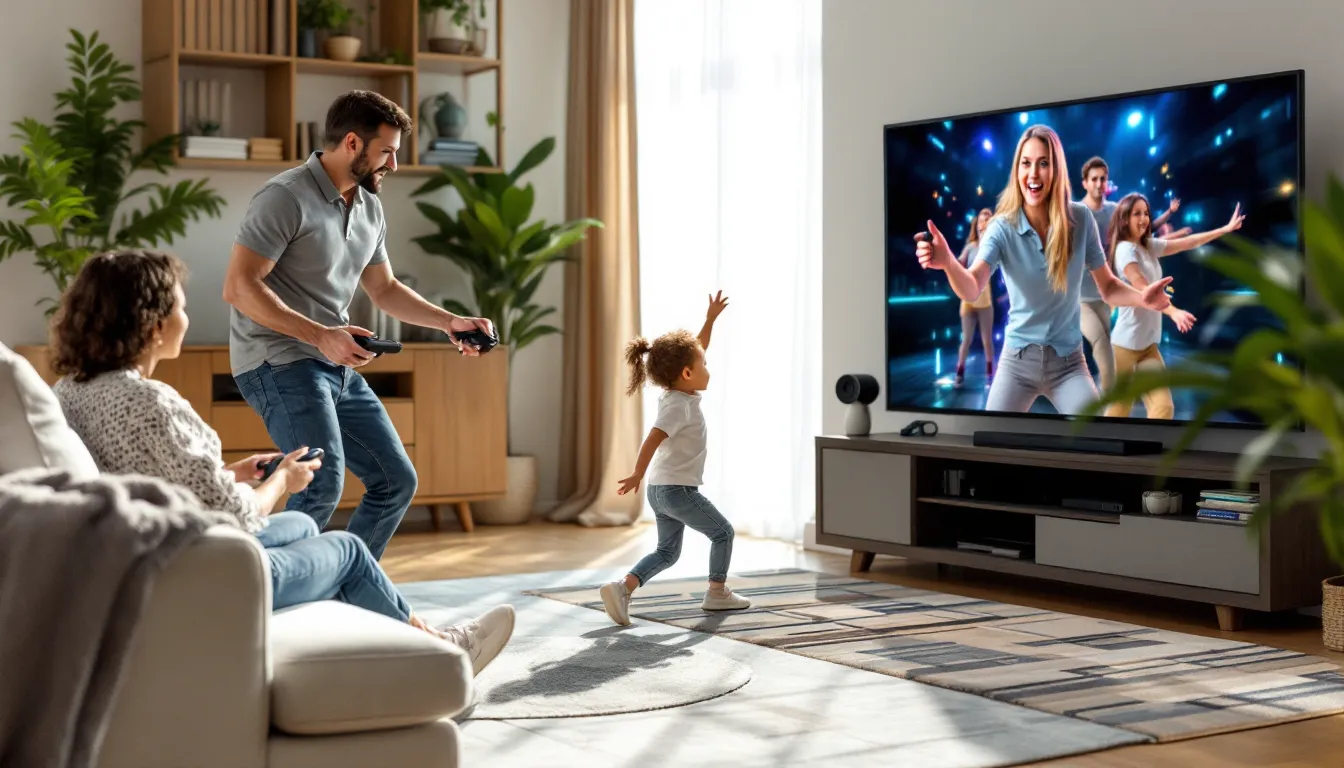
Play in groups. Kinect shined in social settings. Dance Central at parties, Kinect Sports with family, the tech struggled with precision but excelled at creating shared moments and hilarious fails.
Optimize your space every session. Even if your setup worked yesterday, pets, furniture, or changing daylight can affect performance. Do a quick check before playing.
Use voice commands strategically. “Xbox, pause” worked great. Trying to navigate complex menus by voice? Frustrating. Pick your battles.
Check for updates. Even in 2026, occasionally a backward-compatible title might get a patch if technical issues emerge. Unlikely, but keep your console updated.
Manage expectations. Kinect games weren’t trying to compete with Halo or Gears of War. They occupied a different space, accessible, physical, social. Judge them on those terms and you’ll have a better time.
Mix it up. Don’t marathon fitness games then wonder why you can barely move the next day. Alternate between dance, sports, and casual games to avoid burnout.
The Future of Motion-Controlled Gaming Beyond Kinect
Kinect died, but motion controls didn’t. They just evolved.
VR absorbed much of Kinect’s promise. Meta Quest, PlayStation VR2, and Valve Index deliver hand tracking and full-body movement in 3D space, everything Kinect wanted to be, with controllers that add precision. Quest 3’s hand tracking works without controllers entirely, finally delivering on that “you are the controller” dream.
Nintendo Switch proved motion controls still have a place when done right. Joy-Cons pack gyroscopes and accelerometers, and games like Ring Fit Adventure became surprise hits. Nintendo’s approach, motion as option, not mandate, avoided Kinect’s pitfall of forcing it into everything.
PlayStation Move and PS Camera limped along but never captured mindshare. Sony clearly bet harder on VR than standalone motion gaming, and PS5 basically abandoned the tech outside PSVR2.
Mobile AR via phones and tablets picked up casual motion gaming. Pokémon GO proved millions would use their devices for physical gaming experiences, just not standing in their living rooms flailing at a TV.
PC integration kept Kinect alive in unexpected ways. Developers hacked Kinect sensors for 3D scanning, motion capture, robotics, and accessibility applications. The tech found more success in maker communities than gaming.
Microsoft shifted focus to cloud gaming (Game Pass streaming) and traditional controllers. Phil Spencer publicly acknowledged Kinect was ahead of its time but admitted the market wasn’t ready.
The lesson? Motion controls work in specific contexts, VR immersion, fitness gaming, party settings, but can’t replace traditional inputs for most gaming. Kinect tried to be everything to everyone and ended up being optional to most. Future motion tech will likely stay specialized rather than attempt another living room revolution.
Conclusion
Looking back, Kinect was a fascinating experiment that fell just short of its ambitions. The tech was genuinely innovative, skeletal tracking and voice recognition in 2010 was bleeding-edge stuff. But the game library was inconsistent, the space requirements were demanding, and Microsoft’s forced bundling strategy with Xbox One killed mainstream enthusiasm.
Still, if you’re diving into xbox one kinect games or revisiting Xbox 360 classics in 2026, there’s real fun to be had. Dance Central remains an outstanding rhythm game. Kinect Sports delivered solid motion-controlled competition. Fantasia: Music Evolved was a creative marvel. And yeah, even Kinect Adventures has its charm if you squint.
The sensor might be discontinued and the adapter might cost a small fortune on eBay, but the games are cheap and plentiful. If you’ve got the space and the hardware, it’s worth experiencing this weird, wonderful chapter of gaming history before it fades completely into nostalgia. Just remember to move that coffee table first.