The Xbox Series S is still turning heads in 2026, and for good reason. If you’re hunting for a next-gen console that won’t demolish your wallet, Microsoft’s compact all-digital machine delivers serious value. At $299.99, it undercuts competitors while packing genuine current-generation hardware, a Zen 2 CPU, RDNA 2 GPU, and lightning-fast SSD that mean real-world performance gains. Whether you’re a Game Pass subscriber, a digital-first gamer, or someone curious about next-gen without the premium price tag, the Series S deserves a closer look. This guide breaks down what makes it tick, who it’s for, and whether it’s the right console for you right now.
Table of Contents
ToggleKey Takeaways
- The Xbox Series S delivers current-generation gaming at $299.99, making it Microsoft’s most affordable next-gen console with a compact 1.93 kg design perfect for smaller living spaces.
- The Xbox Series S performs at 1080p to 1440p resolution with up to 120 FPS on supported titles, featuring Zen 2 CPU and RDNA 2 GPU architecture that brings noticeable upgrades like Quick Resume and ray tracing compared to last-gen consoles.
- Game Pass transforms the Xbox Series S value proposition, offering hundreds of games including day-one access to Microsoft first-party releases for $11–$17 monthly, making it significantly cheaper than buying individual $60–$70 titles.
- The all-digital Xbox Series S has no optical drive and only 512 GB storage, requiring you to download all games and likely invest in an expansion card to accommodate 100+ GB modern titles.
- Backward compatibility allows the Xbox Series S to play hundreds of Xbox One, Xbox 360, and original Xbox titles, giving you access to a substantial legacy library alongside current-gen games.
What Makes the Xbox Series S Stand Out
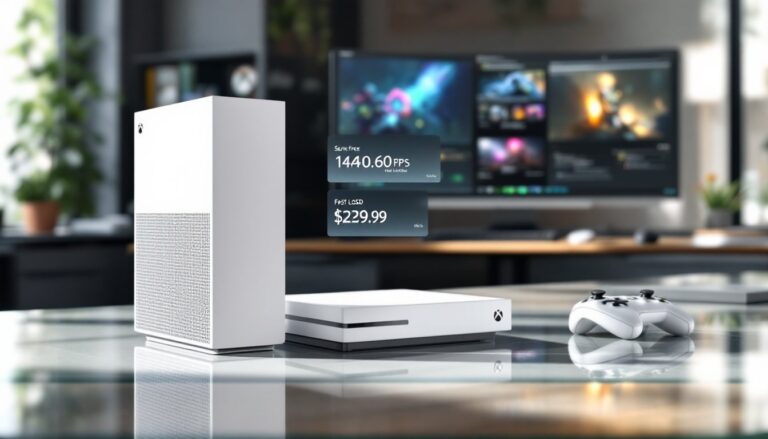
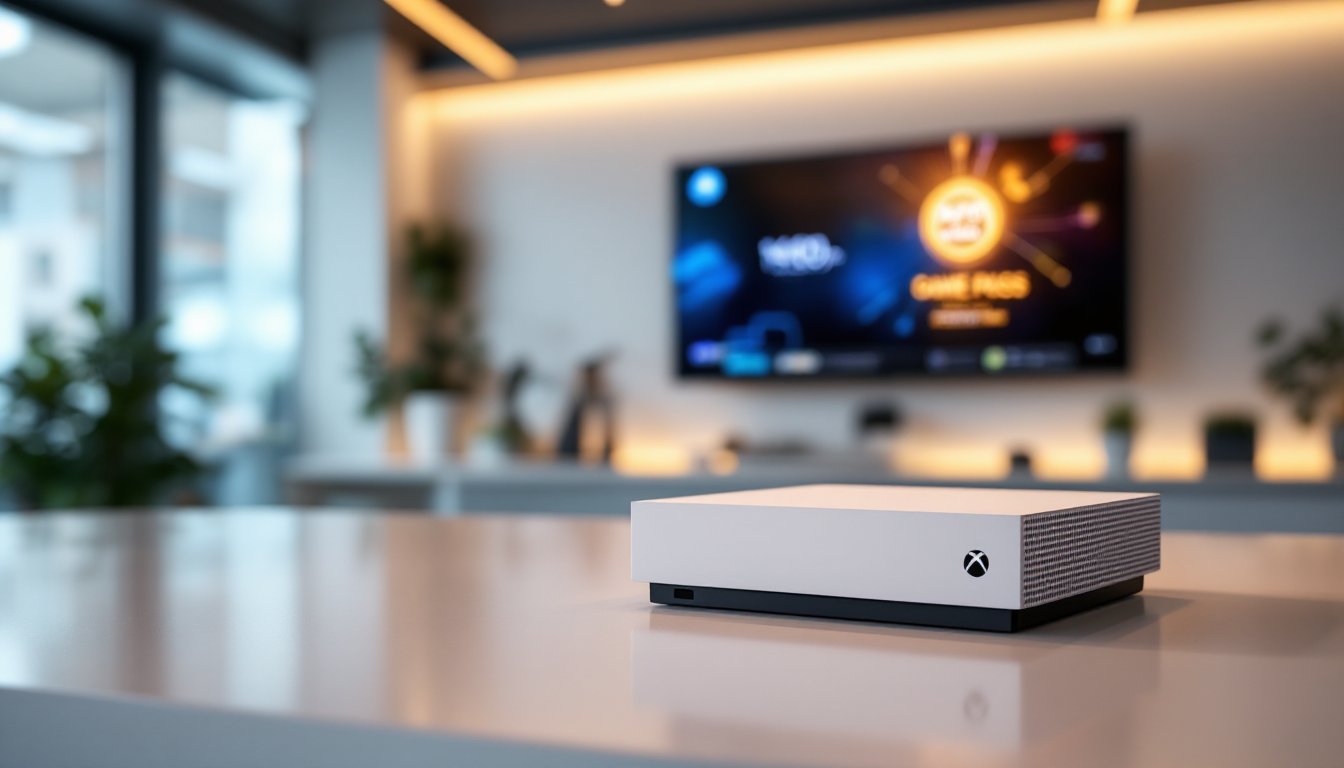
The Xbox Series S is built for a specific kind of gamer: one who values space, price, and digital convenience. It’s the smallest Xbox ever made, just 6.5 × 15.1 × 27.5 cm and 1.93 kg, making it almost laughably compact compared to the Series X. More importantly, there’s no optical drive at all. Games, apps, and media are purely digital, which means you’re committed to downloading everything.
Microsoft positioned the Series S as a 1440p gaming machine with up to 120 FPS on supported titles, plus 4K upscaling for compatible displays. That’s a significant bump from last-gen. The architecture is modern, Zen 2 CPU cores and RDNA 2 graphics, so you get Quick Resume, smart delivery, and other next-gen features that make loading and switching between games feel snappy.
When comparing options, the Xbox Series S vs guide helps clarify the jump in capability. The price difference and form factor appeal to budget-conscious gamers and those in smaller living spaces who don’t want to choose between their Xbox and their coffee table.
Performance and Specs You Need to Know
Processing Power and Graphics Capabilities
Let’s get into the hardware. The Xbox Series S packs an 8-core AMD Zen 2 CPU running at 3.6 GHz with SMT support. The GPU is custom RDNA 2 with 20 compute units clocked around 1.55–1.565 GHz, delivering approximately 4 TFLOPS of compute power.
RAM sits at 10 GB GDDR6, 8 GB running at 224 GB/s for general use, plus 2 GB at 56 GB/s for OS functions. That’s respectable, though the Series X’s extra RAM and higher clock speeds do provide an advantage in complex scenes. Storage is a 512 GB custom NVMe SSD with raw I/O up to around 2.4 GB/s. It’s fast enough to eliminate the loading screens you saw on last-gen consoles, but the 512 GB capacity means you’ll need to manage your library carefully or invest in the 1 TB Xbox Storage Expansion Card.
In real-world gameplay, the Series S renders most current-gen titles at 1080p to 1440p, targeting 120 Hz on supported games. Hardware-accelerated ray tracing is supported, though at reduced settings compared to the Series X. A handful of titles, Ori and the Will of the Wisps, The Touryst, can output native 4K, but that’s the exception rather than the rule.
The console supports HDR, Variable Refresh Rate, and AMD FreeSync, plus HDMI 2.1 connectivity. If your display can handle it, the Series S will push that bandwidth.
Gaming Library and Exclusive Titles
Here’s the critical part: the Xbox Series S plays the exact same games as the Xbox Series X. Halo Infinite, Forza Horizon 5, Starfield, Call of Duty, Elden Ring, they all run on Series S. The difference is that you’re hitting those games at lower resolutions or reduced graphics settings compared to the Series X.
Microsoft’s first-party lineup is extensive. Expect day-one access to new Xbox Game Studios releases like Avowed, the next Fable, and whatever exclusives Microsoft has in the pipeline. Third-party support is strong too, publishers are committed to optimizing for both Series consoles.
Backward compatibility is a huge strength. The Series S can play many Xbox One, Xbox 360, and original Xbox titles thanks to backwards compatibility technology. That library is substantial if you’ve got a backlog from previous generations. Not every old game is playable, licensing, emulation complexity, and publisher permissions create gaps, but hundreds of classics are accessible.
Xbox Game Pass: The Best Value Proposition
If you’re not subscribed to Xbox Game Pass by now, the Series S might finally convince you it’s worth it. Game Pass is where the Xbox Series S truly shines as a value play.
For roughly $11 to $17 per month depending on your subscription tier, you get access to a rotating catalog of hundreds of games, including most Microsoft first-party releases at launch. That means Starfield, new Halo games, Forza titles, and studio exclusives hit Game Pass day one. You’re essentially renting access to a massive library rather than buying individual $60–$70 titles.
Game Pass Ultimate bundles in Xbox Cloud Gaming, which lets you stream games to your phone, tablet, or even a lower-spec PC. If you’ve got solid internet, you can play Series X-quality games without owning the actual hardware, a genuinely forward-thinking feature. Pure Xbox regularly covers Game Pass additions and removals, so you can stay updated on what’s worth diving into this month.
For a Series S owner in 2026, Game Pass transforms the experience from “I bought a console and now games are expensive” to “I have thousands of hours of content at my fingertips for the price of a coffee subscription.”
Should You Buy the Xbox Series S Today?
The Xbox Series S is the right choice if you fit this profile: you’re happy with 1080p to 1440p gaming, you prefer digital ownership (or don’t mind it), you’re interested in Game Pass, and you’re on a tighter budget than Series X buyers.
Here’s what to watch out for:
- Storage crunch: 512 GB fills up fast. Modern games are 100+ GB each. You’ll likely need the expansion card or manage uninstalls frequently.
- All-digital: No disc drive means you can’t buy physical copies or borrow games from friends. Your entire library lives in your Microsoft account.
- Lower graphics ceiling: If you own a 4K TV and want native 4K gaming with maxed-out settings, the Series X is the better pick.
- Game availability: Occasionally, a third-party game might skip Series S due to optimization challenges, though this is rare.
The Windows Central review of the Xbox Series S provides a detailed breakdown of real-world performance across dozens of titles if you want deeper technical analysis.
If you’re jumping from an Xbox One or PS4, the leap feels substantial. Fast loading, Quick Resume, and ray tracing are noticeable upgrades. If you already own a Series X, there’s no reason to switch. But as an entry point to current-gen gaming, especially paired with Game Pass, the Series S remains one of the smartest values in console gaming.
Conclusion
The Xbox Series S is Microsoft’s answer to budget-conscious gamers who don’t want to sacrifice next-gen performance. Its compact form factor, all-digital approach, and aggressive pricing ($299.99) make it accessible. Backed by Game Pass, a solid game library, and genuine hardware improvements over last-gen, the Series S remains a compelling choice in 2026. Just know what you’re signing up for: 1440p gaming, digital-only content, and careful storage management. For the right gamer, it’s an excellent console.