
It’s 2026, and you might think the Xbox One S is ancient history. But here’s the reality: this console remains one of the smartest budget gaming purchases you can make. Whether you’re a casual player looking to jump into Game Pass or a completionist hunting backwards-compatible titles, the Xbox One S punches well above its weight in value. In this guide, we’ll break down why the Xbox One S, and its cousin the Xbox One X, continue to matter, what you’re actually getting under the hood, and whether it makes sense for your gaming setup.
Table of Contents
ToggleKey Takeaways
- The Xbox One S remains a smart budget gaming purchase in 2026, with used or refurbished units available for $100-150 compared to $299+ for current-gen alternatives.
- Backwards compatibility across multiple Xbox generations (original Xbox, Xbox 360, and Xbox One titles) gives the Xbox One S access to hundreds of games without extra cost.
- Game Pass provides exceptional value with 300+ games included, making the subscription more affordable than purchasing individual new releases.
- The Xbox One S handles 1080p/60fps on most modern titles with 4K upscaling support, delivering practical performance for story-driven games and casual players.
- External USB storage is essential since the 1 TB internal drive fills quickly with modern games, though 2-4 TB external drives are affordable at $30-60.
- The console is ideal for budget-conscious gamers, Game Pass subscribers, and secondary gaming setups, but not suitable for competitive players or those demanding cutting-edge graphics performance.
What Makes The Xbox One S Still Relevant
The Xbox One S isn’t flashy, but it’s practical. It plays modern AAA titles at solid frame rates, supports 4K upscaling on many games, and gives you access to Xbox Game Pass, one of the best value propositions in gaming.
The real strength here is backwards compatibility. If you own older Xbox One or even backward-compatible Xbox 360 and original Xbox games, they work seamlessly on the Xbox One S. That’s a massive library without spending extra cash.
There’s also the form factor advantage. Unlike the original Xbox One, the Xbox One S is compact, whisper-quiet, and doesn’t look like it’s heating your living room into an oven. If you’re upgrading from an older console or setting up a secondary gaming station, the space savings alone matter.
Plus, Game Pass for console costs less than most single new releases. With hundreds of titles included, from indie gems to day-one AAA releases, the value math works even in 2026.
Hardware Specs and Performance Capabilities
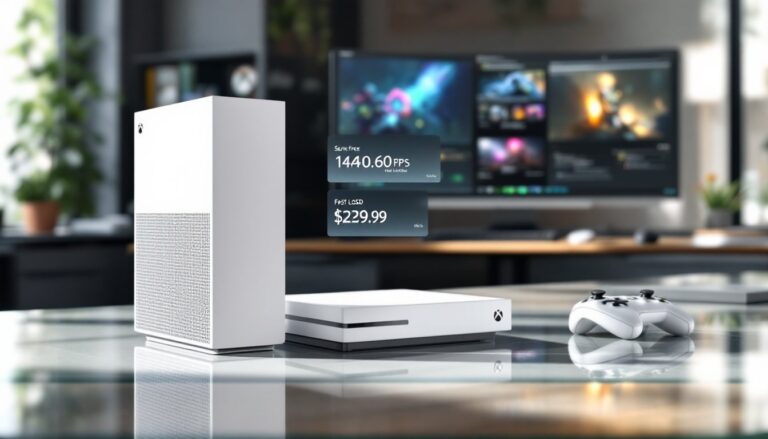
Let’s talk raw performance. The Xbox One S rocks an 8-core AMD Jaguar processor running at 2.3 GHz, paired with 8 GB of RAM and a 1.17 TFLOPS GPU. Translation: it won’t crush 4K 120fps demands, but it handles 1440p or 1080p at 60fps on most modern titles.
Key specs:
- GPU: 1.17 TFLOPS (compared to Xbox Series S’s 4 TFLOPS)
- CPU: 8-core AMD Jaguar at 2.3 GHz
- RAM: 8 GB GDDR5
- Storage: 500 GB or 1 TB SSD options
- Output: Native 4K upscaling, HDR support
The 4K upscaling is real but not native 4K rendering. You’re getting 1440p content scaled up to 4K resolution, it looks noticeably better on a 4K TV than 1080p, but it’s not pixel-perfect. If you’ve got a 1080p or 1440p display, you won’t miss what you’re not getting.
Framerate-wise, most current-gen optimized titles run 1080p/60fps. Some newer releases may dip to 30fps or use dynamic resolution scaling, but they run. The console is six-year-old hardware powering games designed for newer systems, that’s impressive longevity, honestly.
Storage is the weak point. The 1 TB drive fills fast with modern game sizes. You’ll want external USB storage (which the Xbox One S supports) if you’re downloading more than 3-4 large titles.
Game Library and Backward Compatibility
Here’s where the Xbox One S flexes. Thanks to Microsoft’s commitment to backwards compatibility, you’re not locked into just Xbox One releases. The console supports hundreds of backward-compatible Xbox 360 and original Xbox titles.
Classic franchises like Halo, Gears of War, Mass Effect, and Fallout run on your Xbox One S. These games often get performance upgrades, smoother framerates, faster load times, and enhanced resolution, making them play better than on original hardware.
Add Game Pass into the mix, and the library is staggering. At launch of any month, you’ve got access to 300+ games spanning indie platformers, turn-based RPGs, sports sims, and AAA action titles. The service rotates content, sure, but there’s constant variety.
For collectors and completionists, the backwards compatibility library alone justifies owning an Xbox One S. You’re getting multiple generations of games on one machine, that’s not a gimmick, that’s future-proofing your investment. According to gaming industry reviews, backwards compatibility remains one of Xbox’s biggest differentiators.
Value Proposition: Cost vs. Gaming Experience
Let’s be direct: the Xbox One S is cheap. You can pick one up refurbished or used for $100-150 in 2026. Even new stock at retailers runs $150-200 if you hunt for deals.
Compare that to current-gen consoles (Xbox Series S at $299+) or a gaming PC capable of similar performance ($600+), and the Xbox One S becomes a no-brainer for budget-conscious gamers.
The experience trade-off is real but manageable. You’re sacrificing cutting-edge graphics and frame rates for accessibility and affordability. That’s a reasonable deal if you’re:
- Getting into console gaming for the first time
- Want a secondary machine for couch co-op
- Play story-driven games more than competitive shooters
- Are all-in on Game Pass
There’s also the longevity factor. Microsoft has supported the Xbox One S consistently since 2016, and while support is winding down, it won’t disappear overnight. You’ve got years of gaming ahead.
If you’re a competitive player hunting sub-100ms latency or a graphics snob demanding ultra settings and ray-tracing, this isn’t your console. But if you value breadth of content and low entry price, the Xbox One S crushes the value equation.
Comparing The Xbox One S to Current Alternatives
Let’s size up the Xbox One S against actual competition.
Xbox One S vs. Xbox One X: The Xbox One X is the powerhouse older sibling, 4 TFLOPS vs. 1.17. Games render at native 4K at higher framerates. If you find a used One X at a reasonable price ($250-300), grab it. But new stock is gone, and the One S is half the price, making it the smarter buy for most.
Xbox One S vs. PlayStation 4 Slim: Both are aging hardware at this point. Performance is competitive, but if you care about backwards compatibility, Xbox wins decisively. PS4 has excellent exclusive titles (God of War, Spider-Man) that the Xbox can’t match, though those libraries overlap more each year.
Xbox One S vs. Xbox Series S: The Series S is current-gen, newer architecture, and handles modern games better at $299. That extra $150 gets you substantially better performance. For brand-new releases, Series S is superior. For older games and pure value, the One S is still compelling. Per recent gaming tech reviews, the Series S offers better value for future-focused gamers.
Xbox One S vs. Nintendo Switch/OLED: Different categories. Switch is portability: Xbox One S is power and library depth. Not really comparable unless you care about one specific game.
Tips for Getting The Most Out of Your Xbox One S
Got an Xbox One S or thinking about picking one up? Here’s how to maximize the experience:
Invest in external storage. The 1 TB internal drive is tight. A 2-4 TB external USB drive ($30-60) transforms your library flexibility.
Use Game Pass immediately. Even if you’re a physical-disc collector, Game Pass gives you hundreds of trials before committing to purchases. The value proposition is unbeatable.
Hunt for deals on refurbished units. Microsoft and major retailers regularly discount certified refurbished Xbox One S consoles with full warranties. You’ll save $50-100.
Prioritize backwards-compatible releases. If a title supports frame-rate enhancements or resolution improvements for Xbox One hardware, play the enhanced version. These optimizations exist and make a difference.
Manage expectations for newer AAA titles. 2025-2026 releases designed for Series X/S will work on One S, but maybe at 1080p/30fps or with visual compromises. Read patch notes before buying.
Enable Game Pass auto-installs. Games update automatically if you’ve got cloud sync enabled. Reduces friction when you want to jump in.
According to gaming purchasing guides, the Xbox One S remains a solid entry point for console gaming when approached as a value purchase rather than a high-performance gaming machine.
Conclusion
The Xbox One S in 2026 isn’t competing with $500 gaming machines or cutting-edge hardware. It’s a practical, affordable entry point that delivers real gaming value. With backwards compatibility spanning multiple Xbox generations, Game Pass access, and a compact form factor, it remains relevant for a specific audience: budget gamers, Game Pass subscribers, and anyone building a secondary gaming setup. If you can find one at the right price, it’s hard to argue against.