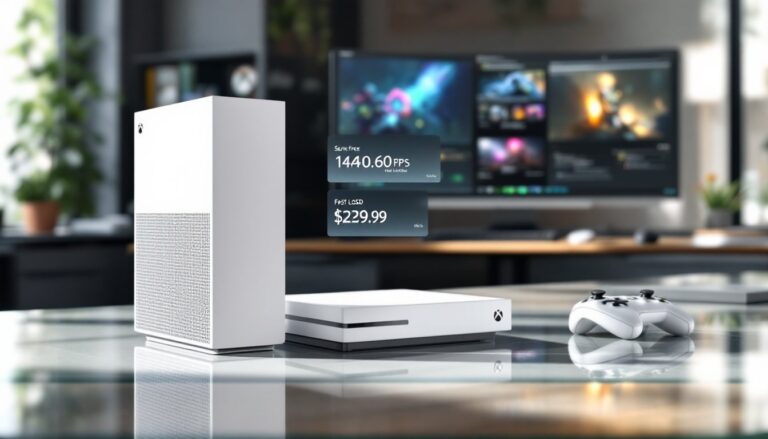

In 2026, the Xbox One X remains a powerful mid-generation console refresh worth considering for gamers seeking serious 4K performance without moving to next-gen hardware. Released in 2017 as Microsoft’s premium offering, this compact powerhouse delivers HDR gaming and UHD media playback at a price point that’s become increasingly attractive as newer systems command higher costs. Whether you’re building a second gaming setup or upgrading from an older console, the Xbox One X’s longevity, backward compatibility, and robust game library make it a compelling option. Let’s break down what makes this machine stand out and whether it’s worth your money in 2026.
Table of Contents
ToggleKey Takeaways
- The Xbox One X delivers genuine 4K/HDR gaming performance in a compact, quiet design that remains a compelling mid-generation option in 2026 without the cost of next-gen hardware.
- Xbox One X Enhanced titles feature optimized visuals, faster load times, and improved performance, while even 1080p displays benefit from supersampling technology for sharper, more stable gameplay.
- Backward compatibility across original Xbox, Xbox 360, and Xbox One titles gives you access to thousands of games, many of which receive enhanced versions at no extra cost.
- The integrated 4K UHD Blu-ray drive provides genuine value for physical media enthusiasts, with smooth streaming support for Netflix and Disney+ when paired with gigabit ethernet.
- Xbox Game Pass ($10-17 monthly) offers hundreds of rotating titles and cloud streaming, making the Xbox One X an affordable entry point for both casual and competitive gamers.
Design and Build Quality
The Xbox One X is deceptively compact for its performance tier. At 11.8 x 9.4 x 2.3 inches and weighing 8.4 pounds, it fits neatly on most entertainment centers without dominating shelf space, a stark contrast to bulkier last-gen consoles. The dense chassis houses an internal 245W power supply, which eliminates the need for an external brick and keeps your setup cleaner.
Port layout is thoughtfully arranged. The front panel houses a 4K HDR Blu-ray drive, a single USB 3.0 port, and a pairing button for accessories. The rear offers considerably more connectivity: an HDMI 2.0b output for displays, HDMI 1.4b input for pass-through, two additional USB 3.0 ports, infrared output, S/PDIF for audio, Gigabit Ethernet, and the power connector. This versatility is crucial if you’re running a media center setup alongside gaming.
Cooling design deserves special mention. The Xbox One X runs noticeably quieter than earlier Xbox One models under sustained load, making it less intrusive during long gaming sessions. Build quality feels solid throughout, no creaks, and the ventilation design keeps thermals in check even during demanding sessions.
4K Performance and Gaming Capabilities
Hardware specs tell the story here. The Xbox One X packs a custom 8-core AMD CPU running at 2.3 GHz paired with a 6 TFLOPS AMD Radeon GPU clocked at 1172 MHz. You’re looking at 12 GB of GDDR5 memory, with 9 GB allocated to games and approximately 3 GB reserved for system functions. These numbers matter because they’re what enable the 4K targeting this machine was built for.
That said, “4K” on the Xbox One X isn’t always native 4K. Many titles use dynamic resolution scaling or checkerboard rendering techniques to maintain frame rates while targeting higher pixel counts. It’s a pragmatic trade-off, you get sharper visuals than standard 1080p without sacrificing frame consistency. In demanding X-enhanced titles, power draw can hit around 175W, which is substantial but still reasonable for sustained gameplay.
Enhanced Game Optimization
Microsoft’s “Xbox One X Enhanced” label is your guide to optimized titles. These games feature specific tweaks: higher resolution outputs, improved texture quality, faster load times, or enhanced performance modes. You’ll also see tags for “4K Ultra HD” (indicating up to 4K output capability) and “HDR” support for high dynamic range visuals.
Owning a 1080p display doesn’t waste the Xbox One X’s potential. Supersampling from higher-resolution rendering produces noticeably sharper images and more stable frame rates compared to lower-res consoles. It’s the kind of technical advantage that compounds across hundreds of hours of gameplay.
Features and User Interface
The Xbox One X runs the same tile-based dashboard and OS foundation as other Xbox One models. Navigation is intuitive, the integrated Store is responsive, and system-level features like Game DVR work flawlessly. You’ll appreciate the faster loading times across most games compared to base Xbox One hardware, it’s not revolutionary, but it’s genuinely noticeable.
Backward compatibility is where the Xbox One X flexes. The console supports a massive catalog spanning original Xbox, Xbox 360, and Xbox One titles. If you own physical discs, you typically get access to enhanced versions at no extra cost. This isn’t novelty, it means your existing library gets better. Digital Trends has extensively documented the backward compatibility ecosystem, proving the depth of accessible games.
Media Playback and Blu-Ray Support
The integrated 4K UHD Blu-ray drive is a genuine feature, not just marketing. 4K movie playback with HDR is fluid, and the console supports HEVC and VP9 codecs for streaming services delivering 4K content. Streaming apps like Netflix and Disney+ work smoothly when paired with gigabit ethernet or solid Wi-Fi.
Power consumption during 4K media playback is higher than 1080p content but stays comfortably below peak gaming power draws. If you’re a physical media enthusiast or 4K collector, this is legitimately valuable. If you’re streaming-only, the Blu-ray drive is a nice-to-have rather than essential.
Value for Money and Game Library
Launch price was $499, but current market availability means better deals depending on your region. For 2026, that translates to solid value, you’re getting premium performance at a lower entry point than newer-gen systems.
The game library argument is almost unbeatable. Native Xbox One titles number in the hundreds. Add backward-compatible Xbox 360 and original Xbox games, and you’re looking at thousands of potential titles. The Verge’s reporting on Xbox’s backward compatibility initiative highlights how Microsoft continuously expands this catalog.
Xbox Game Pass deserves its own paragraph. This subscription service provides access to a rotating catalog of games and cloud streaming support. For $10-17 monthly (depending on tier), you’re sampling hundreds of titles without committing to $60-70 purchases. Yes, the service evolves, games rotate in and out, but that also means constant fresh content.
For competitive or esports-minded gamers, the Xbox ecosystem includes titles like Overwatch, Halo, and Call of Duty with active multiplayer communities. Frame rates and input latency vary by title, but the hardware provides consistent performance for fast-paced shooters. Tom’s Guide’s console comparison reviews break down performance metrics across popular competitive titles.
Casual gamers get equally solid value. Game Pass includes everything from story-driven adventures to puzzle games and indie hits. The breadth ensures anyone finds something worthwhile.
Conclusion
The Xbox One X in 2026 is a capable, compact console that delivers genuine 4K/HDR performance without requiring a jump to current-generation hardware. Its strength lies in refined engineering, an exceptional backward compatibility library, and the proven value of Xbox Game Pass. It’s not cutting-edge, but it’s genuinely solid. For gamers looking to upgrade from older consoles or build a secondary setup, the Xbox One X remains a thoughtful investment.