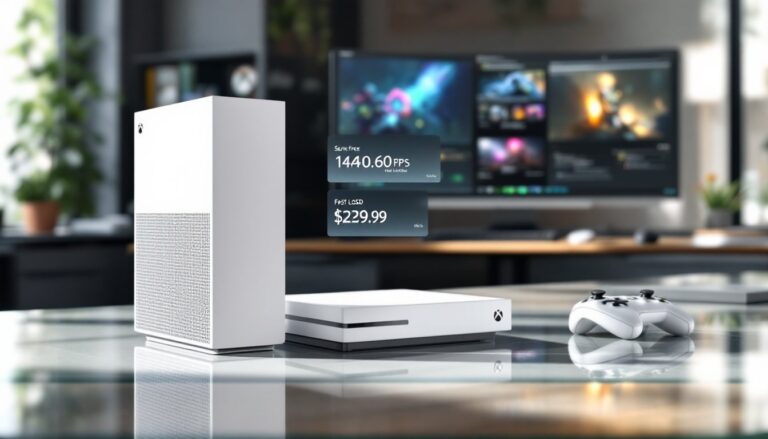
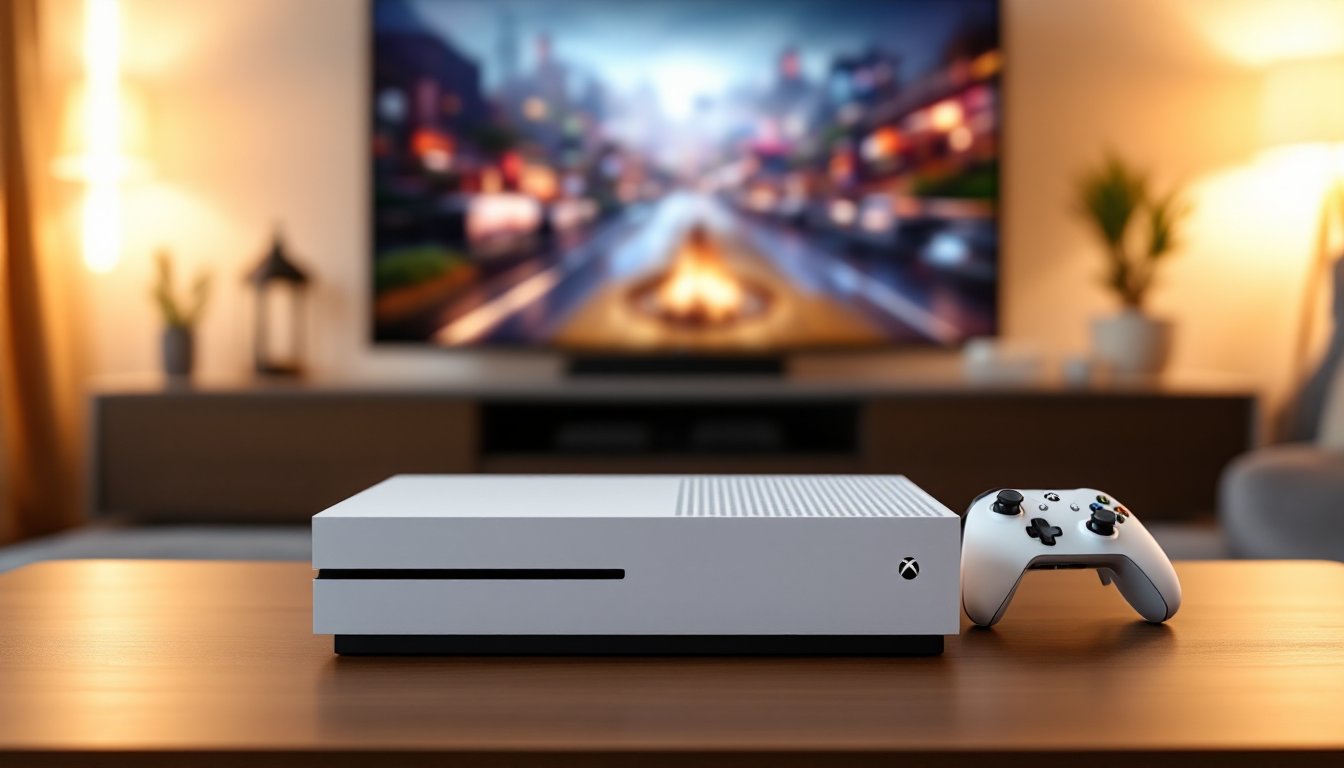
Nearly four years after launch, the Xbox Series S continues to prove itself as Microsoft’s most underrated console. While the flagship Xbox Series X dominates headlines with its 4K ambitions, the Series S quietly delivers next-gen gaming at a fraction of the cost. Targeting 1440p at 60 FPS with support for up to 120 FPS in select titles, it’s become the go-to choice for players who want ray tracing, fast load times, and access to thousands of games without dropping serious cash. If you’re shopping for a next-gen console in 2026, the Series S deserves your attention, especially if you’re all-in on digital libraries and Game Pass.
Table of Contents
ToggleKey Takeaways
- The Xbox Series S delivers next-gen gaming at 1440p with 60 FPS performance and access to Game Pass for a fraction of the cost of competing consoles.
- Ultra-fast SSD technology eliminates 30+ second load times from last-gen consoles, reducing many games to 5-10 second boot times and completely removing loading screens in select titles.
- With 10 GB of GDDR6 memory and a custom 8-core AMD Zen 2 processor, the Xbox Series S supports ray tracing, variable refresh rate, and up to 120 FPS in select titles.
- The Xbox Series S is digital-only with backward compatibility across four Xbox generations, giving you access to thousands of games without purchasing physical media.
- Game Pass makes the Series S the smartest value proposition in 2026, offering 400+ games for $30-40/month versus $60-70 per new release on PlayStation 5 or Nintendo Switch.
- The compact, all-digital design fits tight entertainment centers, includes custom 3D audio with Dolby Atmos and DTS:X support, and comes with the reliable Xbox Wireless Controller.
Key Specs and Performance
The Xbox Series S packs impressive hardware into a diminutive footprint. It features a custom 8-core AMD Zen 2 processor paired with a custom AMD RDNA 2 GPU featuring 20 compute units that deliver 4.006 TFLOPS of performance. This combination is purpose-built for 1440p gaming at 60 FPS, though many titles exceed this target, hitting 120 FPS with variable refresh rate support.
Processor, Memory, and Storage
The Series S carries 10 GB of GDDR6 memory split across two pools: 8 GB clocked at 224 GB/s for graphics and 2 GB at 56 GB/s for system tasks. This architecture differs slightly from the Series X but handles next-gen workloads admirably. Storage comes via a 512 GB custom SSD on the base model, with a 1 TB all-digital variant also available.
That SSD is the real MVP. Load times are brutal to other consoles, we’re talking 5-10 second boots into massive open worlds where last-gen consoles choke for 30+ seconds. The Series S completely eliminated loading screens from many games, a quality-of-life upgrade that’s impossible to overstate once you’ve experienced it.
Video and Connectivity Capabilities
The Series S maxes out at 1440p native output, though it supports 4K upscaling for compatible displays. HDMI 2.1 connectivity ensures you’re not bottlenecking frame rates or refresh rates on modern TVs. For online gaming, you get Wi-Fi 802.11ac and Gigabit Ethernet, plus three USB 3.2 Gen 1×1 ports for external storage or accessories.
Audio is where the Series S shines tech-wise. It supports custom 3D audio, Dolby Atmos, and DTS:X, delivering spatial soundscapes that rival headphone experiences. Variable Refresh Rate and low-latency modes keep competitive gamers happy, though the Series S isn’t marketed as esports hardware the way Xbox Series X sometimes is.
Game Library and Backward Compatibility
Here’s where the Series S becomes genuinely special: it runs thousands of games across four generations of Xbox. Your Xbox One library works natively. The Xbox Series S: The Complete 2026 Buyer’s Guide details exactly which titles see performance boosts, but expect improved frame rates and resolution across the board.
Backward compatibility extends to original Xbox and Xbox 360 games, though be warned, some titles never got ported due to licensing nightmares. Still, the sheer volume of accessible games is massive. Unlike the Series X, you can’t buy used physical copies since the Series S is digital-only, but Smart Delivery ensures you’re always getting the optimized version of any game you own.
The real value proposition sits in Xbox Series S versus competing hardware when paired with Game Pass. Hundreds of titles land on the service day one, making it a subscription service worth the monthly cost for trial-heavy players.
Design, Sound, and Controller Features
The Xbox Series S is compact, aggressively so. It’s a white, all-digital tower that fits in tighter entertainment centers than any competing console. There’s zero nostalgia baggage here: it’s pure utility. The built-in power supply means no external brick hanging off the back, and the industrial design reflects that constraint beautifully.
Sound design is where things get interesting. The Series S includes custom 3D audio support with Dolby Atmos and DTS:X, delivering immersive soundscapes that competitive multiplayer gamers and single-player enthusiasts alike will appreciate. When properly configured with a surround setup, the impact is tangible, footsteps in tactical shooters feel directional, environmental ambiance wraps around you, and cutscenes hit harder.
The Xbox Wireless Controller is included and remains one of gaming’s most reliable input devices. Most Xbox One controllers and accessories work fine: the notable exception is Kinect, which Microsoft has essentially abandoned. If you’re coming from PlayStation 5, the Series S controller feels less feature-rich, no haptic feedback or adaptive triggers, but the grip, D-pad reliability, and general ergonomics favor Xbox ecosystem veterans.
Xbox Game Pass and Value for Gamers
The Series S’s greatest strength isn’t raw power, it’s value proposition. Game Pass is legitimately the Netflix of gaming, and the Series S unlocks it at the lowest hardware entry point. When you’re paying $30-40/month for 400+ games versus $60-70 per new release, the math stops being complicated.
Comparable gaming on PS5 or Nintendo Switch requires committed budgeting if you want breadth. The Series S sidesteps this by bundling hardware, ecosystem, and library into one package. Monthly Xbox Game Pass subscription costs are negotiable if you’re strategic with Microsoft rewards and Game Pass Ultimate stackable trials, save your cash.
Consider the alternative: a PlayStation 5 or high-end gaming PC setup costs 2-3x as much upfront for similar performance targets. The Series S demands no compromise on features either. Ray tracing works. Variable refresh rate works. 120 FPS gaming works in dozens of titles. You’re not getting “budget quality”, you’re getting budget pricing.
For families or group gaming, the Series S is indisputably the smartest financial move in 2026. Recent industry reporting confirms that all-digital consoles now drive the majority of software sales, a trend the Series S capitalized on from day one.
Conclusion
The Xbox Series S isn’t the most powerful next-gen console, the Series X claims that crown. But it’s the smartest one for most players. At 1440p targeted gaming with fast SSD performance, strong backward compatibility, and Game Pass access, it delivers everything next-gen gaming promises without the sticker shock. If you’re serious about digital storefronts and value over raw specs, the Series S is a no-brainer.